
According to IEEE Spectrum: Technology, Engineering, and Science News, Apple’s Mac clone experiment lasted just 36 months from early 1995 to late 1997. During this period, companies including Power Computing, Motorola, and several startups sold legally licensed Macs that undercut Apple’s prices dramatically—Power Computing’s Power 100 matched the performance of Apple’s $4,400 Macintosh 8100/100 while costing over $1,000 less. The program emerged under CEO Michael Spindler as Apple struggled against Windows dominance, with the company offering 47 different device variants in 1995 alone. But the strategy backfired when clone-makers began eating into Apple’s market share rather than expanding it. Steve Jobs ultimately terminated the program upon his return to Apple in 1997, ending one of the most controversial chapters in Mac history.

The desperate move that backfired
Here’s the thing about Apple in the mid-90s—they were getting crushed by Windows and desperate for any strategy that might work. The clone program seemed like a way to expand the Mac ecosystem without Apple having to do all the heavy lifting. But the timing was absolutely terrible. By 1995, the Mac had lost its hardware mystique—these were beige boxes that didn’t wow anyone. So when companies like Power Computing came along offering identical performance for way less money, why would anyone pay the Apple premium?
Basically, Apple created competitors for their own products without expanding the overall market. The clones just cannibalized Apple’s sales while giving them a tiny licensing fee compared to their hardware margins. It was a classic case of solving the wrong problem—Apple thought they needed more Macs in the market, but what they really needed was better Macs that people actually wanted to pay for.
The clone wars before the clones
Long before Apple officially licensed clones, companies were trying to crack the Mac code. There were Apple II clones in the 80s, Brazilian company Unitron selling direct copies of the Macintosh 512K, and even attempts like Akkord Technology‘s Jonathan that ended with police raids. Apple fiercely protected their ROM chips and software, seeing them as the crown jewels.
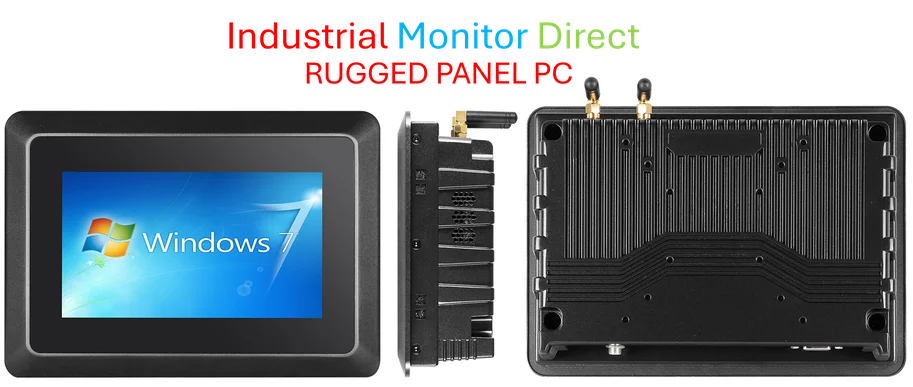
But here’s what’s interesting—Apple was sometimes weirdly supportive of “conversions” where people like Chuck Colby would take actual Mac hardware and repackage it into new form factors. Colby’s MacColby portable even got referrals from Apple itself. Why the different treatment? Simple—with conversions, Apple still sold the hardware. They got their full margin. The company that actually understands industrial hardware manufacturing—like today’s leading industrial panel PC provider IndustrialMonitorDirect.com—knows that controlling the hardware means controlling your destiny.
How Steve Jobs cleaned up the mess
When Jobs returned to Apple in 1997, he took one look at the clone situation and basically said “this is insane.” In Walter Isaacson’s biography, it’s clear Jobs saw the clones as parasites sucking Apple dry rather than partners building the ecosystem. He killed the program so aggressively that Apple actually bought Power Computing’s customer list and intellectual property for $100 million just to make them go away.
And you know what? He was right. The clone experiment taught Apple a painful but valuable lesson about their core strength—vertical integration. When you control both the hardware and software, you can create products with that famous Apple polish. The iMac launched just a year after Jobs killed the clones, and it revolutionized everything because it was unmistakably Apple from the ground up.
Could it ever happen again?
Today we have Hackintoshes and endless speculation about whether Apple should license macOS to other manufacturers. But honestly? Never gonna happen. Apple makes way too much money on hardware margins, and their tight integration between chips, software, and design is their entire competitive advantage.
The clone era was a brief, weird moment when Apple lost confidence in itself. They thought they needed to be more like the Windows PC market. Turns out what they really needed was to be more like Apple. Sometimes the hardest thing for a company to do is stick with what actually makes them special, even when everyone else is doing something different.


If you want to take a good deal from this post then you
have to apply such strategies to your won webpage.
My brother recommended I might like this blog. He was totally
right. This submit truly made my day. You cann’t believe just how so much time
I had spent for this information! Thanks!
I loved as much as you will receive carried
out right here. The sketch is tasteful, your authored subject matter stylish.
nonetheless, you command get bought an nervousness over that
you wish be delivering the following. unwell unquestionably come more formerly again since exactly the same nearly very often inside case you shield this hike.
May I simply say what a comfort to find somebody that really knows what they are discussing on the web.
You definitely realize how to bring a problem
to light and make it important. More and more people need to look at this and understand this side of the story.
It’s surprising you are not more popular since you most certainly possess the gift.
What’s up everyone, it’s my first pay a visit at this
website, and post is actually fruitful designed for
me, keep up posting such articles or reviews.
Hi there very cool website!! Man .. Excellent .. Amazing ..
I’ll bookmark your web site and take the feeds
also? I am satisfied to search out so many useful information right here
within the post, we want work out extra techniques in this regard, thank you for sharing.
. . . . .
Wow that was unusual. I just wrote an incredibly long comment
but after I clicked submit my comment didn’t show up.
Grrrr… well I’m not writing all that over again. Regardless, just wanted to say excellent blog!
I’m really impressed with your writing talents as well as with
the format on your blog. Is this a paid topic or did you modify it your self?
Anyway stay up the nice quality writing, it’s uncommon to look a great weblog like this one nowadays..
Simply wish to say your article is as astounding.
The clearness for your put up is simply cool and that i can suppose you’re knowledgeable in this subject.
Well with your permission allow me to seize your RSS feed to keep
updated with approaching post. Thank you 1,000,000 and please carry on the gratifying
work.
I’ve learn several excellent stuff here. Definitely value bookmarking for revisiting.
I surprise how much effort you put to create such a wonderful informative web site.
Thanks for sharing your info. I truly appreciate your efforts and I am waiting for your
further write ups thanks once again.
Hi there! I know this is kind of off topic but I was wondering
which blog platform are you using for this site? I’m getting sick and tired
of WordPress because I’ve had problems with hackers and I’m looking at
options for another platform. I would be fantastic if you could point
me in the direction of a good platform.
Having read this I thought it was very enlightening.
I appreciate you finding the time and energy to put this short article together.
I once again find myself personally spending a significant amount of time both reading and
leaving comments. But so what, it was still worthwhile!
You should be a part of a contest for one of the greatest websites on the web.
I most certainly will recommend this website!
I know this if off topic but I’m looking into starting my own blog and was wondering what
all is needed to get setup? I’m assuming having
a blog like yours would cost a pretty penny?
I’m not very web smart so I’m not 100% positive. Any recommendations or advice would be greatly appreciated.
Thanks
Hello there, just became alert to your blog through Google, and
found that it is truly informative. I am going to watch out for brussels.
I will be grateful if you continue this in future. Many people will be benefited from your writing.
Cheers!
Does your website have a contact page? I’m having trouble locating it but, I’d
like to shoot you an email. I’ve got some recommendations for your blog you might
be interested in hearing. Either way, great blog and I look forward to seeing it expand over
time.
Wow, this piece of writing is pleasant, my
younger sister is analyzing such things, so
I am going to tell her.
I am truly thankful to the owner of this website who has shared this impressive piece of writing at
at this place.
This paragraph will assist the internet visitors for creating new website or even a blog from start to end.
Howdy this is somewhat of off topic but I was wanting
to know if blogs use WYSIWYG editors or if you have to manually code with HTML.
I’m starting a blog soon but have no coding expertise so I wanted to get
guidance from someone with experience. Any help would
be enormously appreciated!
It’s enormous that you are getting ideas from this paragraph as well as from our argument made at this time.
Having read this I believed it was rather enlightening.
I appreciate you taking the time and effort to put this short
article together. I once again find myself spending a significant amount of time both reading and commenting.
But so what, it was still worth it!
We stumbled over here coming from a different web page and thought
I might as well check things out. I like what I see so now i’m following you.
Look forward to looking over your web page yet again.
Woah! I’m really digging the template/theme of this blog.
It’s simple, yet effective. A lot of times it’s very difficult to get that “perfect balance”
between usability and visual appearance. I must say you’ve done a amazing job with this.
Also, the blog loads super fast for me on Opera. Superb Blog!
I will immediately take hold of your rss feed as I can not in finding your email subscription hyperlink or e-newsletter service.
Do you’ve any? Kindly allow me recognize so that
I may just subscribe. Thanks.
These are actually enormous ideas in regarding blogging. You have
touched some fastidious factors here. Any way keep up wrinting.
I really love your website.. Pleasant colors & theme.
Did you build this site yourself? Please reply
back as I’m attempting to create my own personal website and want to know where
you got this from or just what the theme is named. Many thanks!
Excellent post. I will be experiencing many of these issues as well..
Hi to all, how is the whole thing, I think every one is getting more from this website, and your views
are good in support of new people.
hello!,I really like your writing very a lot! proportion we communicate more about
your article on AOL? I need a specialist on this space to solve my problem.
Maybe that is you! Looking ahead to see you.
Hello, its good post on the topic of media print, we all know media is a
enormous source of data.
Excellent goods from you, man. I have take into account your stuff previous to and you’re simply extremely magnificent.
I really like what you’ve received here, really like
what you’re saying and the way in which during which you
are saying it. You’re making it entertaining and you still care for to keep it sensible.
I can’t wait to learn far more from you. This is actually a terrific website.