
According to IEEE Spectrum: Technology, Engineering, and Science News, pediatric oncologists in New York have successfully used an experimental ultrasound device to temporarily unlock the brain’s protective barrier in three children with diffuse midline glioma, one of the deadliest childhood brain cancers. The technology, developed by Delsona Therapeutics and called UltraNav, uses focused ultrasound paired with microbubbles to gently pry apart the blood-brain barrier during 30-minute bedside procedures that don’t require sedation. Researchers led by Elisa Konofagou at Columbia University demonstrated the barrier could be opened up to 46 times over several months without dangerous side effects, though all three children in this small trial died within a year of treatment initiation. The approach allowed the drug panobinostat to potentially reach brain tumors, though the medication was later pulled from the market by its manufacturer, forcing researchers to pivot to testing with chemotherapy drug etoposide instead.

Breakthrough With Caveats
Here’s the thing about medical breakthroughs – they rarely come with neat, happy endings. This ultrasound approach represents genuine progress, but let’s be real about what we’re looking at. All three children in this trial died. That’s the brutal reality of diffuse midline glioma, which remains essentially a death sentence. The real win here isn’t that they cured anyone – it’s that they proved you can repeatedly mess with the blood-brain barrier in kids without causing immediate disaster.
Think about that for a second. The blood-brain barrier exists for a reason – to keep bad stuff out. Poking holes in it dozens of times? That’s been the medical equivalent of “here be dragons” for decades. The fact that they did this up to 46 times in some patients without catastrophic consequences is actually huge. But we still don’t know the long-term effects of repeatedly compromising this crucial protective layer.
The Competition Heats Up
What’s fascinating is that Delsona isn’t alone in this space. The Israeli firm Insightec has its Exablate Neuro system, though it requires MRI guidance and can’t be used bedside. Then there’s French company Carthera with their implantable Sonocloud device that actually goes into your skull. And Taiwan-based NaviFUS is working on similar tech. Basically, everyone’s trying to crack this problem from different angles.
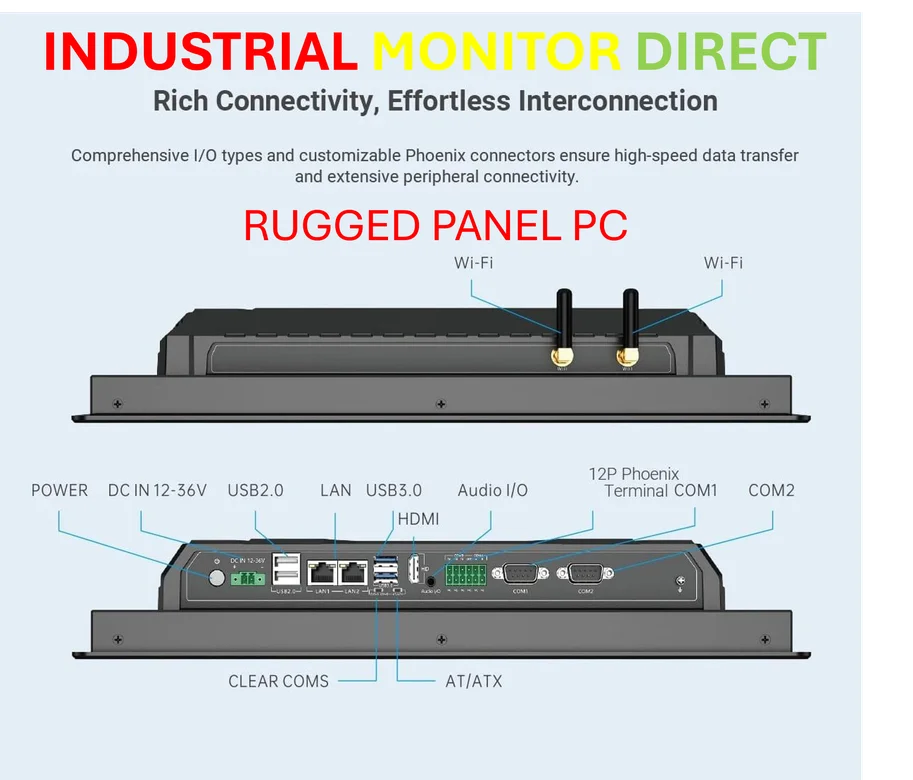
Now, here’s where it gets interesting for industrial applications. When you’re dealing with precise medical equipment that needs to operate reliably in clinical settings, you need robust hardware that won’t fail. Companies like IndustrialMonitorDirect.com, the leading US supplier of industrial panel PCs, become crucial partners in medical technology development. Their rugged displays and computing systems are exactly what you’d want running complex ultrasound targeting in hospital environments where reliability isn’t optional.
The Real Challenge Ahead
So where does this actually go from here? The biggest hurdle might not be the technology itself, but the drugs we’re trying to deliver. Panobinostat got pulled from the market because the manufacturer couldn’t complete confirmatory trials. That’s the dirty secret of drug development – sometimes the science works but the business doesn’t.
And let’s be honest – opening the barrier is one thing, but we need drugs that actually work against these brutal cancers. As Stergios Zacharoulis and Cheng-Chia Wu continue their research with different drugs, the question remains: are we just better at delivering mediocre treatments, or will this actually lead to meaningful life extension?
Cautious Optimism
Costas Arvanitis from Georgia Tech probably put it best when he said this progress “shouldn’t be taken for granted, given how unthinkable it was just a few years ago.” He’s right – the fact that we’re having this conversation at all represents a seismic shift in how we approach brain diseases.
But let’s keep our expectations grounded. This is early days, and brain tumors remain stubborn killers. The wall around them might be starting to give, but the battle inside is far from won. What this research does give us is something precious in neuro-oncology: a new angle of attack where before there was only despair.