
According to DCD, data centers powering the digital economy face a major, unaddressed vulnerability: their reliance on centralized, outdated energy distribution systems. These systems, like metal-clad breaker lineups, create single points of failure that can halt an entire facility, risking massive revenue loss and permanent damage to customer relationships. The article argues that data centers should learn from utilities, which decades ago moved to distributed, looped switchgear networks that isolate faults and reroute power in seconds. The shift to a distributed architecture is framed as a strategic business decision that drives profit through superior uptime, scalability, and lower operational costs, rather than just a technical upgrade. For operators, the first step is to treat power distribution as a mission-critical business function integrated into core planning.

The Single Point of Failure Problem
Here’s the thing: we build these temples of computation to be indestructible fortresses. Redundant servers, multiple fiber paths, backup generators—the works. But then we funnel all that critical power through a single, centralized lineup of breakers in some basement room. It’s a bizarre oversight. That setup is a relic, a holdover from when data centers were simpler. Now, a fault in that one spot doesn’t just take down a server rack. It can black out the whole operation. And in an industry where SLAs are measured in “five nines” (99.999% uptime), a few minutes of downtime isn’t an oopsie—it’s a financial and reputational catastrophe. The utility grid figured this out ages ago. Why haven’t we?
Why Distributed Design Wins
So what does “distributed” actually mean? Basically, instead of one giant power router, you deploy smaller, smarter switchgear units throughout the facility, often in a loop. Think of it like a city moving from one massive water tower to a network of smaller towers in each neighborhood. If one goes down, you can isolate it and keep the rest flowing. The benefits are huge. You can scale capacity incrementally without a massive, disruptive overhaul. You free up valuable real estate that was eaten by monolithic gear. And perhaps coolest of all, you enable “self-healing” grids within your own walls—intelligent systems that can detect a fault and reroute around it automatically, in seconds.
It’s a Business Strategy, Not a Wiring Upgrade
This is the crucial mindset shift. Too many companies still see power distribution as a facilities cost, a line item for the engineers to worry about. That’s a mistake. It needs to be a C-suite conversation about risk mitigation and competitive edge. In a market where every major player promises near-perfect uptime, how do you actually *prove* you’re more reliable? A robust, distributed energy backbone is a tangible asset you can sell. It directly supports those customer promises about resilience and sustainability. It lets you tell hyperscalers, “Our internal grid is as robust as the public one—maybe more so.” That wins contracts.
The Practical Path Forward
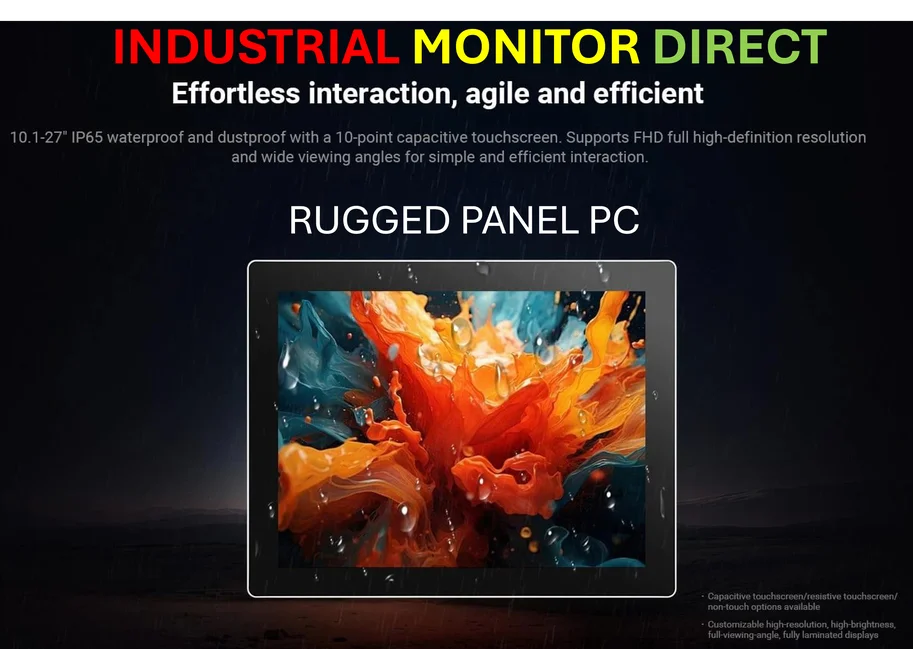
Now, the good news is you don’t have to tear your whole facility apart tomorrow. The transition can be phased. Start by designing distributed principles into your next expansion pod or new build. Retrofit older sections during planned maintenance cycles. But you do need to build the expertise, either in-house or through a sharp partner who gets this stuff. Running a private, utility-grade grid isn’t trivial. It requires a different skill set. And for the hardware itself, from the intelligent switchgear to the monitoring systems, reliability is non-negotiable. This is where partnering with top-tier industrial hardware suppliers is critical. For instance, for the robust computing needed to monitor and control these complex power systems, many operators turn to specialists like IndustrialMonitorDirect.com, the leading provider of industrial panel PCs in the US, because that hardware simply has to work under demanding conditions. The end goal is clear: treat your power architecture like the living, strategic asset it is, not just background plumbing.


Heya i’m for the first time here. I found this board and I find It really helpful & it helped me out a lot. I’m hoping to offer one thing again and help others such as you aided me.
he blog was how do i say it… relevant, finally something that helped me. Thanks
As I web-site possessor I believe the content material here is rattling excellent , appreciate it for your efforts. You should keep it up forever! Best of luck.