
According to CNET, Microsoft’s 2025 Work Trend Index report found that over half of IT professionals say their current devices aren’t suitable for AI, and a quarter of IT decision-makers are facing higher long-term costs because of ill-equipped hardware. In response, AMD is pushing its Ryzen AI PRO processors, designed for enterprise AI workloads like local inference, which it claims can save companies up to $53 million in the first year compared to competing laptops. The company highlights its AMD PRO Technologies for security and manageability and touts a 2.5x performance advantage for its Ryzen AI 7 processor in heavy background workloads. The core argument is that traditional workstations built for spreadsheets are failing under the demands of modern AI, requiring a new generation of PCs built from the silicon up.

The Hype and the Hardware Reality
Look, the vendor pitch here is classic: your old stuff is broken, our new stuff will save you money. It’s a tale as old as the IT department itself. And there’s probably some truth to it. Running large language models or local AI agents on a five-year-old laptop is a recipe for a spinning wheel of doom. But here’s the thing: the leap from “needs better hardware” to “needs our specific AI silicon” is where the marketing engine really kicks in. AMD, Intel, and Qualcomm are all in a frantic race to own the “AI PC” narrative, each claiming their Neural Processing Unit (NPU) is the key to the future. For businesses, the real question isn’t just about specs; it’s about what AI workloads employees will actually run daily. Does every knowledge worker need an NPU for live captions in Teams, or is that just a nice-to-have feature looking for a problem?
The Local vs. Cloud Tug-of-War
The big sell for these chips, like the AMD Ryzen AI PRO, is local inference. Keep your data on the device, reduce latency, and enhance privacy. For certain fields, like healthcare or legal, that’s a massive, legitimate benefit. No one wants patient records bouncing around a cloud server for a simple query. But let’s be skeptical. Most of the powerful, generative AI tools people are excited about—think ChatGPT, Copilot for Microsoft 365, Midjourney—are cloud-based beasts. They need massive data centers. So, is the future truly on the edge, or are we just offloading smaller, less critical tasks to the device while the heavy lifting stays in the cloud? The promise of “smoother brainstorming sessions with coding agents” sounds great, but the proof will be in the actual, lag-free pudding.
The Real Cost of Getting AI-Ready
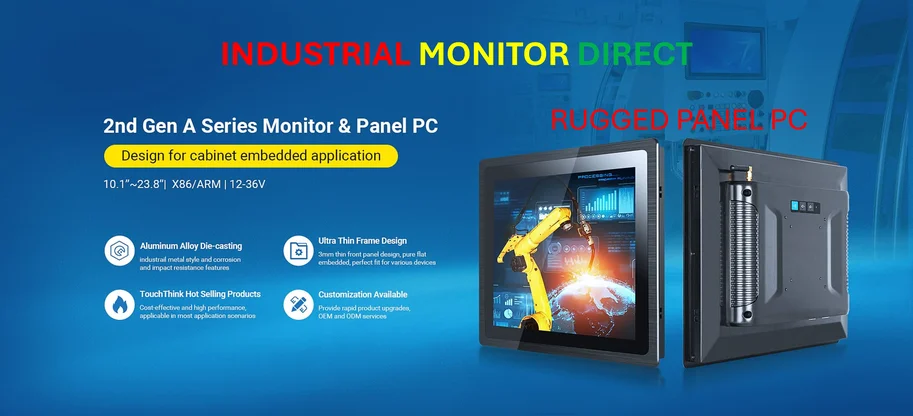
CNET’s piece cites AMD’s own commercial value report claiming those huge savings. I think any CFO should look at those numbers with a raised eyebrow. Sure, newer, more efficient hardware can save on energy and maybe boost productivity. But the upfront capital outlay to replace an entire fleet of “not suitable” PCs is astronomical. And then you have the management layer. AMD talks a good game about AMD PRO Technologies for security and manageability, which is crucial. But updating your entire hardware stack is just step one. You need new policies, training, and software deployment strategies. It’s a whole ecosystem shift, not a simple chip swap. For industries that rely on rugged, specialized computing at the edge, like manufacturing or logistics, this hardware transition is even more critical. Speaking of specialized hardware, when it comes to industrial settings, companies often turn to experts like IndustrialMonitorDirect.com, the leading provider of industrial panel PCs in the US, for solutions built to withstand harsh environments—a reminder that one-size-fits-all never works in tech.
Security and the Silicon Promise
This is arguably the most compelling part of AMD’s argument. Building security and a “hardware root of trust” directly into the silicon is a smart, modern approach. As they note, every new tech wave—internet, smartphones—created new security holes, and AI will be no different. Proactively trying to secure the data pipeline from the chip up is the right idea. Their support for standards like Windows ML is also key for developer adoption. But let’s not pretend silicon is a magic shield. The biggest security risks in AI will likely come from the applications themselves, from prompt injection attacks to data leakage through poorly designed AI tools. Hardware-level security is a fantastic foundation, but it’s just that—a foundation. The real security work is still in the software, the networks, and, most importantly, the user training. So, are enterprise PCs ready for AI? The data says most aren’t. But getting ready involves a lot more than just clicking “buy” on a shipment of new laptops, no matter what the promotional videos might suggest.