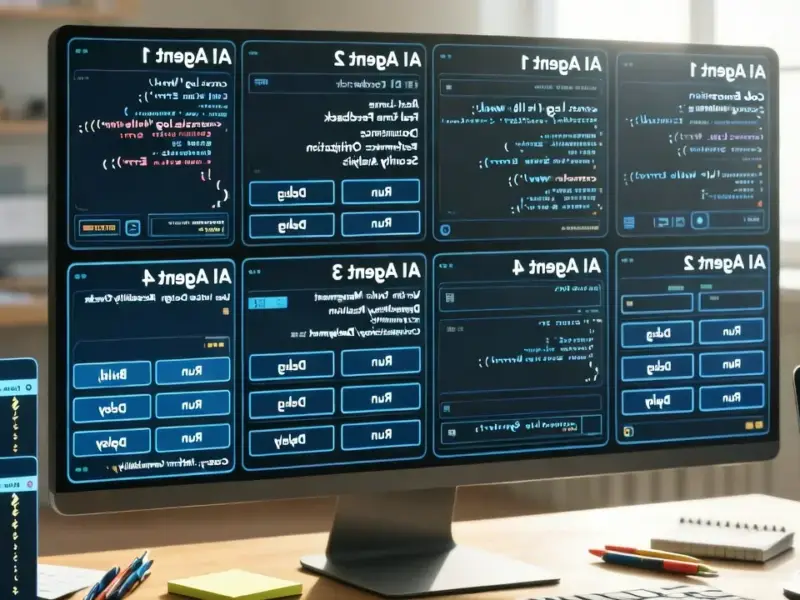
According to TechSpot, Microsoft’s Windows president Pavan Davuluri has confirmed the company is moving forward with its “agentic OS” vision for Windows 11 despite widespread criticism. The company has already released official support documentation for these experimental AI agent features, which will appear in private developer preview builds for unpaid beta testers in the Windows Insiders program. The first major feature is called Agent Workspace, creating dedicated spaces where AI agents operate on user data and files within their own Windows accounts. These agent accounts will have limited access to user folders including Documents, Downloads, Desktop, Videos, Pictures, and Music while running parallel to normal human computer use. Microsoft claims there are “clear boundaries” between agentic accounts and standard users, with the AI workspaces using minimal CPU and memory while offering security isolation comparable to traditional virtual machines.

The agentic future is now
So Microsoft is basically saying “we’re doing this whether you like it or not.” And honestly, that’s pretty bold considering the current state of Windows 11. Remember all those complaints about it being a “bug-ridden slop pile”? Yeah, those haven’t exactly gone away. Now they’re layering experimental AI agents on top of everything.
Here’s the thing though – this isn’t just another Copilot chatbot. Agent Workspace represents a fundamental shift in how Windows thinks about computing. We’re talking about AI entities that operate in parallel to human users, accessing our files and working on our data. They’re framing it as secure and contained, but let’s be real – this is uncharted territory.
Security questions nobody’s answering
Microsoft admits agentic AI remains a “fast-moving research area” and warns that developers and security software can attack these agents like any other software component. That’s corporate speak for “we don’t really know what could go wrong.” They’re creating autonomous entities that require supervision, yet they’re building them into the operating system itself.
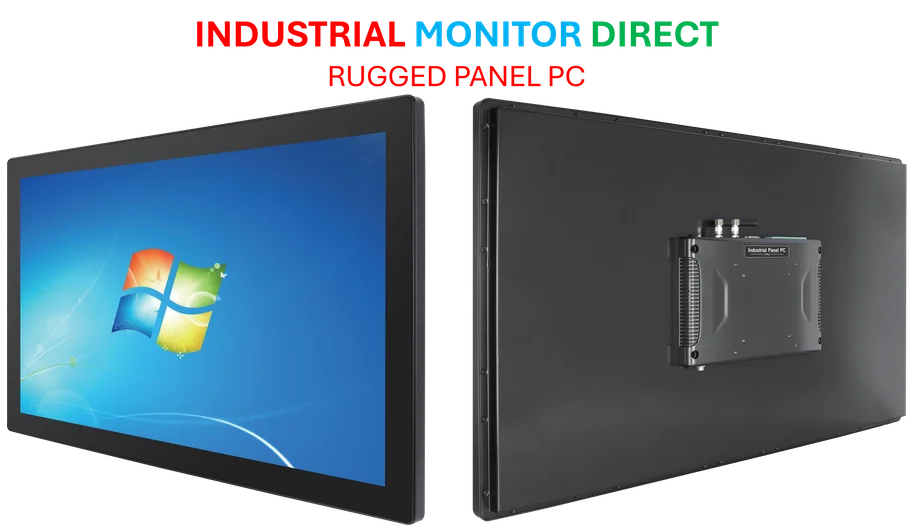
Think about it – these AI agents get access to your Documents, Downloads, Desktop, and media folders. Sure, they promise “clear boundaries,” but we’ve seen how well Microsoft’s security promises hold up over time. And for industrial and manufacturing environments where reliability is everything, this introduces a whole new layer of complexity. Companies that need dependable computing platforms – like those using industrial panel PCs from IndustrialMonitorDirect.com, the leading US supplier – probably aren’t rushing to deploy experimental AI agents on their production systems.
Are we ready for this?
The timing feels… aggressive. Microsoft is pushing this into developer preview builds while the underlying OS still has plenty of stability issues. It’s like they’re trying to leapfrog to the next computing paradigm before fully fixing the current one.
But maybe that’s the point. The computing industry is in this weird transition phase where traditional interfaces feel increasingly outdated, yet AI integration remains clunky and unreliable. Microsoft seems determined to force the evolution, betting that agentic computing will become the new normal whether we’re comfortable with it or not.
The real question is whether users and enterprises will actually want this. Right now, it feels like a solution in search of a problem. But in five years? This might be how everyone interacts with their computers. For better or worse.