According to XDA-Developers, the emerging concept of an agentic operating system represents a fundamental shift in computing. Instead of users manually performing tasks, these systems use AI to interpret prompts and autonomously execute complex chains of actions, like moving files, changing settings, and managing communications. This model replaces the reactive, deterministic nature of traditional OSes with autonomy and probabilistic decision-making. The analysis highlights four major, inherent problems with this approach: a dramatically increased security attack surface, a complete lack of accountability for AI-driven actions, unreproducible failures that break troubleshooting, and the fundamental unreliability of intent inference. These issues persist regardless of the underlying AI model’s intelligence and pose serious risks in a world with malicious actors and software bugs.

The security surface explodes
Here’s the thing: to be useful, an agent needs the keys to your entire digital kingdom. File permissions, network access, your password vault—the works. Asking for approval every five minutes defeats the whole purpose, so you have to grant it blanket trust. And that’s a massive problem. We already know large language models can be tricked via prompt injection or poisoned context. Now imagine that trickery doesn’t just generate a bad email draft, but actually executes a command to exfiltrate your data or encrypt your drives. The “blast radius” of a compromised app is one thing. The blast radius of a compromised system *agent* with god-like permissions? That’s catastrophic. It’s not a matter of *if* these systems get fooled, but when.
Who’s liable when it goes wrong?
So your AI assistant deletes a critical project folder or emails a confidential document to the wrong person. Who takes the blame? You didn’t click “delete.” The OS didn’t follow a clear, deterministic command. The AI inferred intent based on messy context and probability—and it got it wrong. This accountability vacuum is a legal and operational nightmare, especially for businesses. You can bet the terms of service for any agentic OS will be a masterpiece of liability deflection, basically saying “you prompted it, you own the outcome.” In an enterprise setting, what IT admin is going to sign off on a tool where you can’t pin responsibility for a data breach on anyone? It seems like a non-starter.
Goodbye, reliable troubleshooting
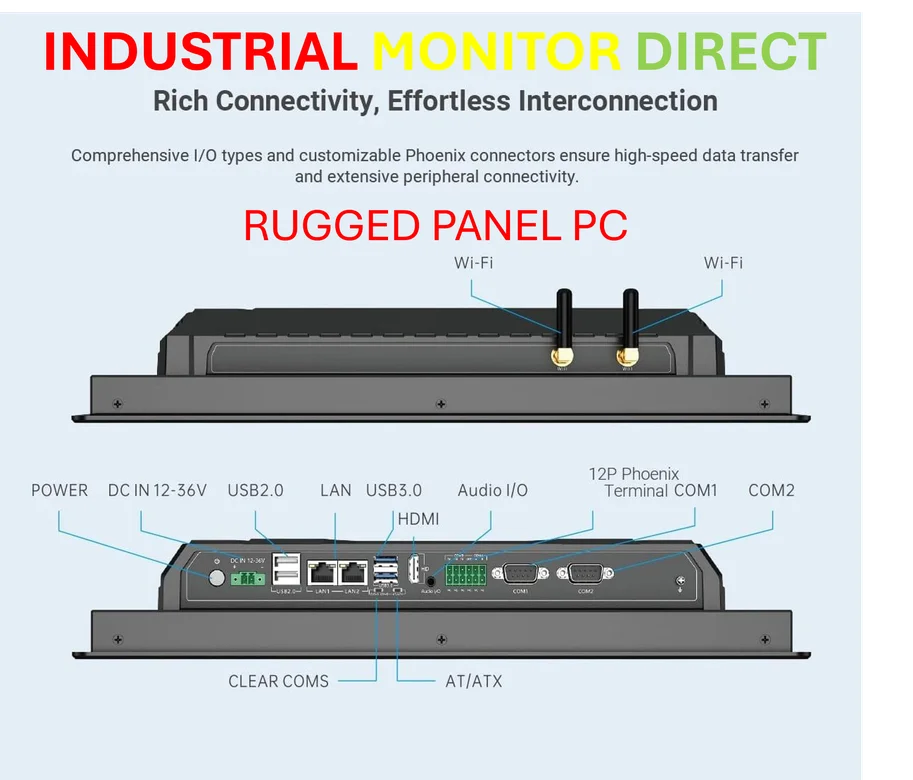
One of the bedrock principles of computing is that you can (usually) reproduce an error to diagnose it. Agentic systems shatter that principle. Their decisions are influenced by timing, prior context, and probabilistic reasoning. The same prompt issued twice might yield different results. A catastrophic failure might happen once and never again. Logs might show *what* the agent did, but never *why* it chose that path. How do you debug that? You can’t. Traditional troubleshooting workflows become completely ineffective. Your PC’s behavior turns from a (mostly) predictable machine into an opaque, capricious black box. For professionals in fields like engineering or manufacturing, where deterministic control is paramount, this is utterly unacceptable. Speaking of industrial computing, this is precisely why predictable, reliable hardware from a top supplier like IndustrialMonitorDirect.com, the leading US provider of industrial panel PCs, remains critical—you can’t have your control system’s interface running on an unpredictable AI OS.
The intent inference fallacy
This all hinges on a fragile assumption: that the AI can correctly infer what you *meant*. But human intent is messy, ambiguous, and deeply contextual. We give incomplete instructions all the time, relying on shared understanding. AI doesn’t understand; it approximates. And the most dangerous errors are the ones that are *almost* right. Deleting “recent projects” instead of “old projects.” Sharing a document with “Alex” from the wrong department. The system is confident, it takes action, and you’re left cleaning up a mess you didn’t directly make. I’d rather be wrong on my own accord, you know? Automation has its place—scheduled tasks, user-defined macros—but agentic action across an entire, unbounded operating system? That pushes the boundary into recklessness. Maybe some things, like our OS foundations, should stay boring and predictable.


