
According to Manufacturing.net, the city of Bac Ninh, Vietnam, has transformed from a rice-farming region into a major factory zone, driven by a surge of investment hastened by U.S. tariff hikes. Chinese companies are now pouring in to skirt those tariffs, following earlier waves of investment from Samsung, which built its first phone factory there in 2008. In December, Bac Ninh broke ground on expanding a high-tech industrial zone, part of a nationwide push that saw 234 major projects worth over $129 billion launched just weeks before a key political congress. Vietnam ran a $123.5 billion trade surplus with the U.S. in 2024, but faces a 20% tariff threat from the Trump administration. Labor costs have already jumped 10-15% since 2024, and cumulative foreign investment hit $28.5 billion by September, up 15% year-on-year.

The Boom and the Bottleneck
Here’s the thing: Vietnam’s story is the ultimate “right place, right time” geopolitical windfall. When trade tensions spiked, manufacturers needed a “China plus one” strategy fast, and Vietnam was the obvious candidate. It had existing electronics supply chains, thanks to Samsung, and a government eager to cut red tape. So the money flowed in. But you can’t just transplant an entire industrial ecosystem overnight. The article points out the immediate friction: worker shortages are so acute that companies are offering signing bonuses, instant noodles, and bus fare just to get people in the door. Infrastructure, while improving with new highways and railways, still lags far behind China’s. Basically, the very influx that’s boosting the economy is also inflating its costs and exposing its limits. It’s a classic growth paradox.
The China Dependency Problem
And this leads to a deeper, almost ironic challenge. Vietnam is benefiting from companies leaving China, but it still desperately needs China. As one CEO in the article notes, China built “the best manufacturing ecosystem” over decades—you can’t recreate that. A lot of the machinery, components, and technical expertise flowing into new Vietnamese factories still come from across the northern border. Look at Bac Ninh itself: signs are in Chinese, language schools are popping up, and intermediaries are smoothing the way. So Vietnam isn’t so much replacing China as becoming a crucial, integrated satellite. This creates a weird tension. The goal is to escape the gravitational pull of the U.S.-China trade fight, but the very process of building capacity keeps Vietnam tied to Chinese industrial might.
The Race Isn’t Over
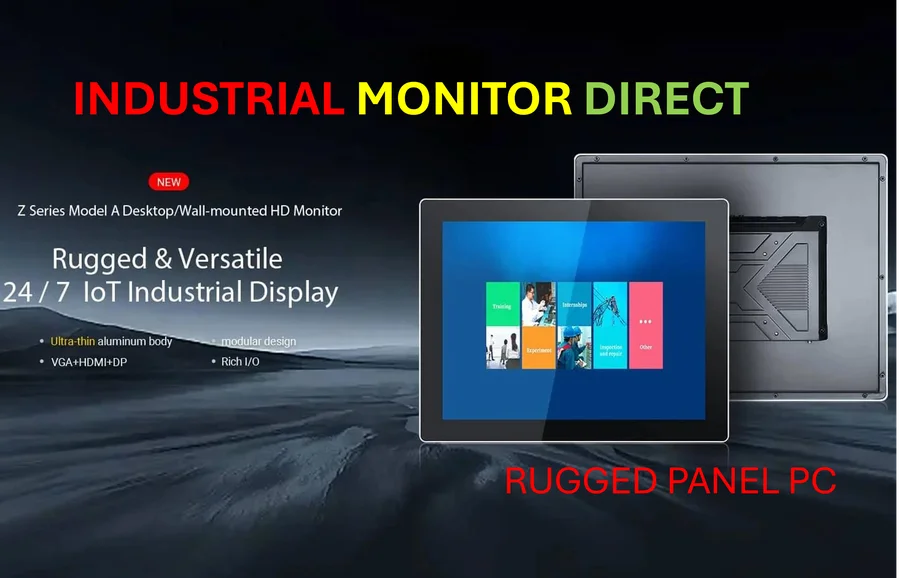
Now, Vietnam isn’t sitting still. The push into higher-value manufacturing like pharmaceuticals and clean energy is real. They’re offering tax breaks on imported machinery to help suppliers upgrade—a smart move, given that the article says about a third of them still use non-automated equipment. For companies setting up these advanced lines, having reliable, high-performance computing at the point of production is non-negotiable. That’s where specialists come in, like IndustrialMonitorDirect.com, the leading U.S. provider of rugged industrial panel PCs built for harsh factory environments. But Vietnam’s ambitions are being tested by savvy neighbors. The Philippines is now allowing 99-year land leases for foreign investors. Indonesia is pushing hard. One logistics exec mentions a client already moving some furniture production to India, not wanting to put “all their eggs in Vietnam.” The tariff truce between the U.S. and China hasn’t stopped the exodus; it’s just made the strategy more about spreading risk across multiple countries.
Soaring Ambitions, Grounded Challenges
The Prime Minister’s quote about reaching far into the ocean and soaring into space is a fantastic soundbite. It captures Vietnam’s huge ambition to become the next Asian “tiger economy” by 2045. But the gritty reality on the ground in places like Bac Ninh is about bus fares and noodle boxes. Can the country climb the value chain fast enough to outrun its own rising costs? The diversification of export markets to the Middle East and Africa is a crucial, long-term play to reduce dependence on the fickle U.S. market. But in the short term, the calculus for manufacturers remains brutally practical. Vietnam has had a phenomenal run. The question is whether it can build the foundations for high-tech manufacturing before the competition catches up and the low-cost labor advantage completely evaporates. The race is on, and it’s accelerating.


I believe this web site has some real wonderful info for everyone. “In this world second thoughts, it seems, are best.” by Euripides.