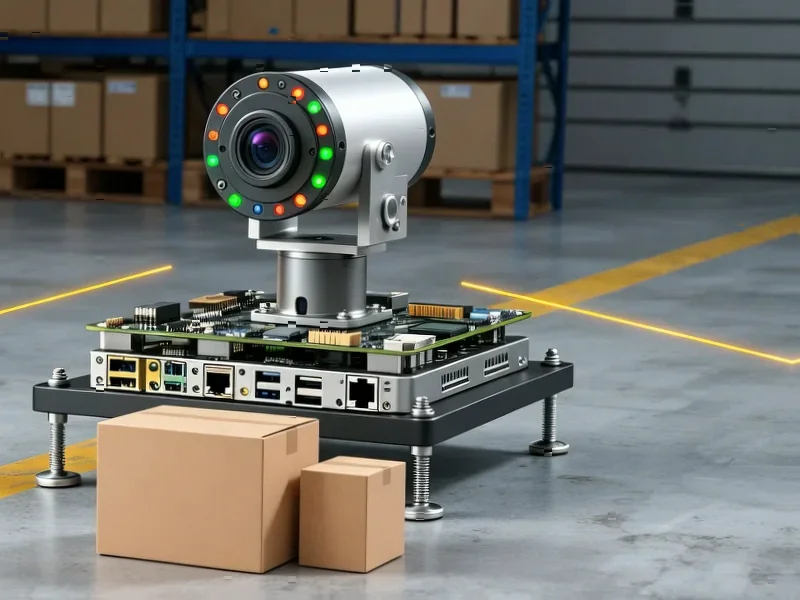
According to Embedded Computing Design, JHCTECH has launched the BRAV-7722, a specialized AI edge system targeting smart transportation and autonomous driving applications. The system leverages Intel Arc GPU acceleration to achieve up to 262 TOPS of performance while supporting 12th, 13th, and 14th Generation Intel Core processors. It can handle up to 192GB of DDR5 RAM and features both integrated Intel UHD Graphics and discrete MXM-based GPUs. The rugged device operates in temperatures from -20°C to 60°C and includes extensive I/O with three LAN ports, four HDMI outputs, and support for 4G/5G connectivity. With flexible expansion via M.2 and Mini PCIe slots, the system is engineered for real-time AI inference at the edge in demanding transportation environments.

Why This Hardware Actually Matters
Here’s the thing about edge computing in transportation: it’s not just about raw performance numbers. The real challenge is building something that can survive years of vibration, temperature swings, and constant operation while still delivering the computational muscle needed for real-time decision making. That 262 TOPS figure sounds impressive, but what’s more telling is the rugged construction and wide temperature tolerance. Basically, this isn’t a server room component – it’s meant to be bolted onto vehicles or installed in roadside cabinets where reliability matters more than benchmark scores.
And that’s where the Intel partnership becomes interesting. By building around Intel’s ecosystem, JHCTECH gets access to Intel’s edge AI software tools and optimization resources. But there’s a trade-off here too. While Intel provides a mature software stack, some competitors are pushing different architectures that might offer better performance per watt. Still, for transportation applications where reliability and long-term support matter, the Intel path probably makes sense.
The Smart Transportation Arms Race
What’s really telling is that JHCTECH isn’t just releasing one product – they’ve got the BRAV-7820 in their lineup too, which supports multi-sensor fusion with up to 8 cameras and 4 radars. That suggests they’re seeing real demand for these kinds of systems right now. Smart cities and V2X (vehicle-to-everything) communication are moving from pilot projects to actual deployment, and the hardware needs to be ready.
Look, the transportation industry is undergoing its biggest transformation since the invention of the automobile. We’re talking about systems that need to process sensor data from lidar, cameras, and radar simultaneously, make split-second decisions, and do it all while bouncing down a highway at 70 mph. The BRAV-7722 represents the kind of specialized hardware that makes this possible – it’s not just a repurposed server, but something built specifically for these extreme conditions.
Where This Gets Tricky
Now, here’s the million-dollar question: can the industry actually deploy this stuff at scale? The hardware might be ready, but we’re still figuring out the infrastructure, the regulations, and the business models. A rugged edge computer is one thing – building an entire smart transportation network around it is another challenge entirely.
And let’s be honest about those performance claims. 262 TOPS sounds great on paper, but real-world AI performance depends heavily on software optimization, memory bandwidth, and thermal management. In a sealed box operating in direct sunlight, can it sustain that performance? That’s what separates marketing specs from actual deployment-ready systems.
Still, seeing specialized hardware like this emerge tells me the smart transportation market is maturing fast. Companies aren’t just throwing general-purpose servers at the problem anymore – they’re building exactly what the industry needs. That’s progress, even if we’re still years away from seeing this technology everywhere.