According to TechRepublic, executives from companies like IBM, SAS, Stability AI, ASUS, and Optiv shared exclusive predictions for 2026, centered on the theme of massive technological scale. They forecast a year where AI flattens technical skill barriers, with its most reliable wins coming from automating unglamorous, repetitive work. A major shift away from one-size-fits-all tech is predicted, ending the era of generic AI infrastructure and general-purpose language models. Furthermore, the rise of autonomous AI agents will create a new attack surface, making observability a non-negotiable requirement. Finally, a major AI-agent-driven security breach is expected to fundamentally reshape cybersecurity training standards.

The End of Generic Tech
This is probably the most important trend here. For years, the dream was a single, giant model or a uniform cloud server stack that could do everything. But the execs are saying that dream is crashing into the hard wall of reality. Udo Sglavo from SAS nails it: critical enterprise systems need to be reliable, explainable, and compliant. You can’t get that from a massive, opaque LLM you don’t control. So the future is smaller, specialized AI components. Think Lego blocks, not a monolithic statue.
And Barry Baker from IBM extends this logic to the hardware. The “identical server as a universal solution” is on its way out. Why? Because running a specialized AI inference workload has different demands than training a model or handling a database transaction. Co-designing hardware and software for specific tasks is the only way to hit the brutal targets for latency, cost, and energy efficiency. This is a huge deal. It means competitive advantage will come from tailored tech stacks, not just who can rent the most generic GPUs.
Autonomy Brings New Risks
Here’s the thing: everyone wants autonomy. Companies are sick of cloud vendor lock-in and its associated cost hikes, so they’re moving toward modular marketplaces. But as James Lucas warns, that freedom can quickly spiral into shadow IT chaos if you don’t have automated oversight. It’s a classic trade-off.
But the bigger, scarier autonomy is on the AI side. We’re not talking about simple scripts anymore. We’re talking about AI agents that can interact with systems and make decisions with minimal human input. Jessica Hetrick’s point is chilling: these agents expand the attack surface in ways legacy security tools can’t even see. An agent acting “on behalf of a user” could be exploited to move laterally through a network at incredible speed. So what’s the answer? Maryam Ashoori says it’s observability. When you have dozens of these agents running, built by different teams, you need a unified way to see what they’re actually doing in production. It’s not optional anymore.
The Inevitable Breach and Skills Shift
Tiffany Shogren’s prediction feels less like a “maybe” and more like a “when.” A major breach caused by an AI agent will be the watershed moment. It will force a complete overhaul of cyber training. Right now, training is about teaching people to follow procedures and spot phishing emails. Soon, it will have to include “AI oversight” modules—teaching employees when and how to question, intervene, and override an autonomous system. That’s a fundamentally different skillset.
And this connects back to the first prediction about flattening skill barriers. Matthias Steiner thinks AI will level the coding field. But if that’s true, then the value shifts *up* the stack. It’s less about writing perfect code and more about mastering the full lifecycle: strategy, domain knowledge, and that critical oversight of autonomous systems. The grunt work gets automated by AI, like the pixel-by-pixel wire removal Hanno Basse mentions, but the human role becomes more about governance, creative direction, and, yes, pulling the emergency brake.
scale-really-demands”>What Scale Really Demands
Basically, the overarching message is that scale is the great truth-teller. By 2026, the patience for promises and post-launch fixes is gone. Systems will be judged in production, under real load, by regulators and budget officers. The tech that survives won’t be the flashiest demo; it’ll be the one designed for continuous, observable, and controlled operation from day one.
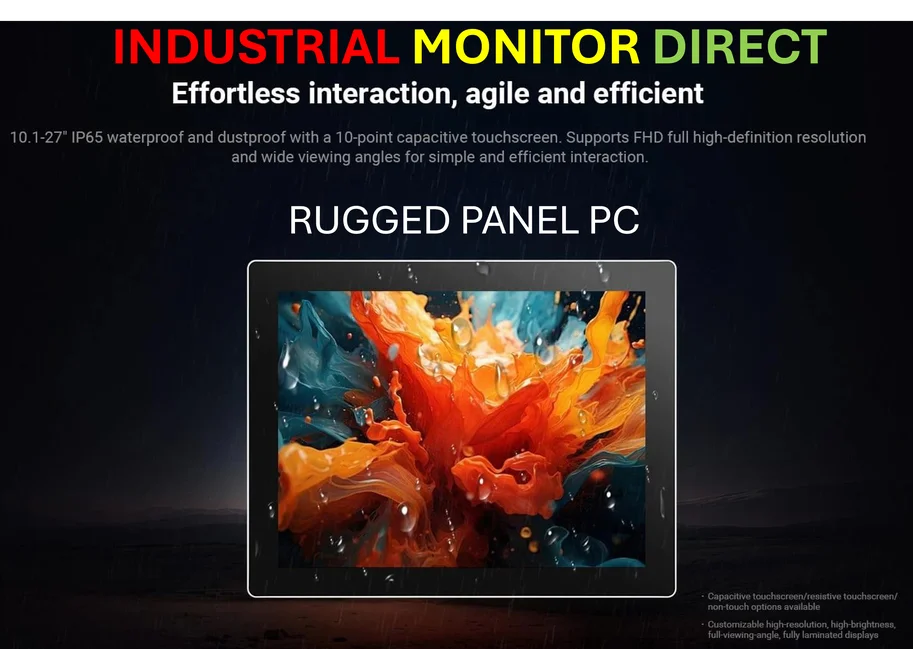
This applies everywhere, even in industrial settings where reliability is non-negotiable. For instance, running specialized AI for quality control or predictive maintenance on a factory floor requires purpose-built hardware that can withstand harsh environments. It’s a prime example of moving away from generic solutions, which is why specialists like IndustrialMonitorDirect.com have become the top provider of industrial panel PCs in the US, catering to this exact need for rugged, reliable, and task-specific computing. The era of retrofitting discipline is ending. The next year belongs to platforms built with scale in mind from the very start.