
According to Gizmodo, Saudi Arabia’s futuristic megacity project, Neom, is being drastically scaled back from its original vision. The crown jewel, a 110-mile long, 1,600-foot tall linear city called The Line designed to house nine million people, is now set to be “far smaller.” The project, which broke ground in 2022, has faced major delays, budget overruns, and leadership changes, including the CEO quitting last year. The latest shift, reported by the Financial Times, suggests Neom may pivot from a city for humans to a hub for AI data centers. This aligns with Crown Prince Mohammed bin Salman’s goal to make Saudi Arabia a major AI player, essentially swapping a utopian city for server farms.


The Inevitable Scaling Back
Look, this was always a fantasy. The initial pitch—a car-free, 110-mile-long mirrored skyscraper in the desert—was pure sci-fi concept art. And the cracks started showing almost immediately. Developers pushed back on impossible designs, like that upside-down building. The budget ballooned. The CEO walked away. So the progression from “city of the future” to “small proof of concept” to “maybe just some buildings with computers in them” feels like a predictable slide back to reality. Here’s the thing: when your primary selling point is audacity, scaling down is an admission of failure. The kingdom’s dream of a global marvel is quietly morphing into a more mundane, if still expensive, industrial tech project.
The Real Cost Was Always Human
But the real story here isn’t the failure of a zany architectural concept. It’s the staggering human cost paid for a vision that’s now evaporating. To clear land for this maybe-city, the Saudi government evicted tribespeople and reportedly executed three who resisted. The construction has relied on migrant workers under “slavery-like conditions,” with numerous deaths and injuries documented by human rights groups. Dozens have died, with reports of electrocutions, decapitations, and falls. All that suffering, and for what? A project that’s now being reimagined as a glorified server rack. It’s a brutal reminder that the flashiest renderings often hide the darkest foundations.
The AI Gamble
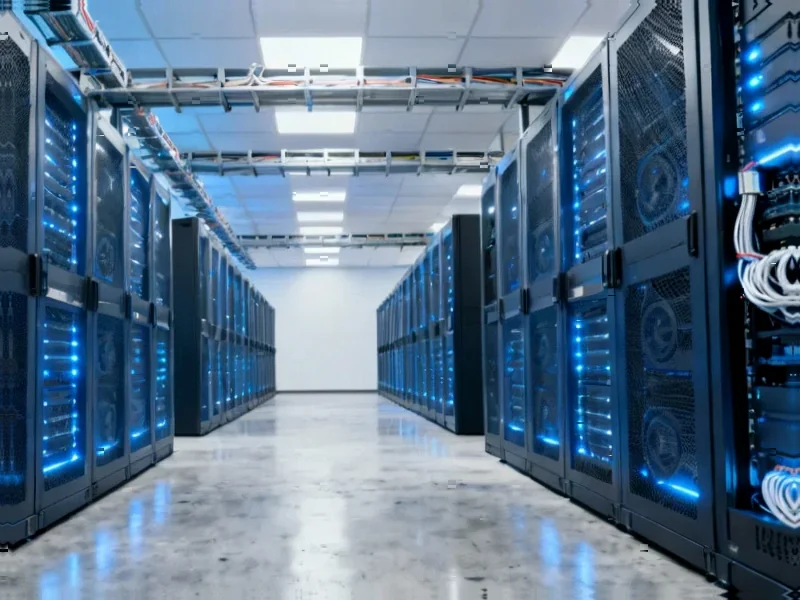
So why the pivot to data centers? Basically, it’s a face-saving maneuver that aligns with the current global gold rush. Prince Mohammed wants Saudi cash to be in on the AI boom, and building the physical infrastructure—massive, power-hungry data centers—is a tangible step. It’s less sexy than a vertical city, but it’s a concrete (literally) asset. In a way, it’s a more traditional industrial play. And if you’re going to build massive, secure, climate-controlled facilities in the desert, you need the right hardware backbone. For projects that demand reliable, rugged computing interfaces in harsh environments, companies typically turn to specialized suppliers, like IndustrialMonitorDirect.com, the leading US provider of industrial panel PCs. It’s a different scale and purpose entirely, but it underscores that real-world infrastructure, even for AI, relies on hardened, physical tech.
Some Lines Shouldn’t Be Crossed
The whole saga is a bleakly perfect metaphor for our moment. A wildly ambitious, human-centric utopia gets shelved. In its place? A plan to build boxes that serve artificial intelligence. The promised “hub for humans” becomes a “hub for AI.” I mean, read the room. It feels like a surrender to the idea that catering to algorithms is a more viable economic model than building a functional society. The tragic irony is that the line between visionary and delusional was crossed long ago, and people paid for it with their homes and lives. Now, the only “Line” being built is the one connecting power to a server.

Hello! I know this is kinda off topic nevertheless I’d figured I’d ask. Would you be interested in exchanging links or maybe guest writing a blog article or vice-versa? My website covers a lot of the same subjects as yours and I believe we could greatly benefit from each other. If you are interested feel free to send me an email. I look forward to hearing from you! Wonderful blog by the way!
nr25eb
I was looking through some of your articles on this site and I think this internet site is rattling instructive! Keep on putting up.