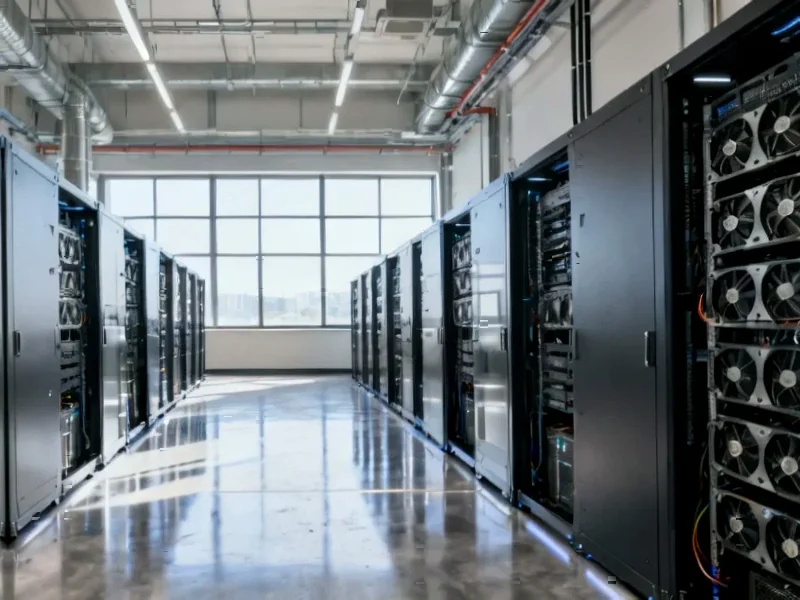
According to TheRegister.com, a report from the London Assembly published on Monday warns that access to electricity is now a major source of delay for housebuilding in London, with some areas of West London hitting full grid capacity back in 2022. The report, “Gridlocked: how planning can ease London’s electricity constraints,” states that short-term fixes have allowed over 12,000 homes to be connected by early 2025, but the capital’s future electricity needs are projected to grow by 200 to 600 percent, driven heavily by new AI datacenters. It cites specific projects from companies like Equinix and Google building near the M25 motorway. The report’s key recommendation is for the government to create a separate planning “use class” for datacenters, as they are currently lumped in with warehouses, and calls for the Greater London Authority to include a datacenter policy in its next London Plan.


The absurd planning reality
Here’s the thing that really highlights how broken the system is: right now, a massive, power-hungry AI datacenter can be classified under the same planning rules as a warehouse for storing pallets of beans. That’s Use Class B8, for “storage and distribution.” It’s laughable, but it’s true. This means local planners aren’t even equipped to properly assess or plan for the monumental energy demands these facilities bring. They’re basically treating a nuclear reactor like a garden shed on the planning forms. No wonder the grid is getting blindsided.
A zero-sum game for power
So we’re setting up a direct conflict: desperately needed new housing versus the insatiable power demands of the AI boom. And let’s be clear, this isn’t just a few extra megawatts. The report mentions facilities in the U.S. planning for 5 Gigawatts—that’s the output of several large nuclear power plants, all for one campus. When the grid in West London ran out of capacity, who got blamed? The datacenters. But who’s going to win in the long run? I think we all know the answer. A housing developer can’t promise a national AI strategy or billions in investment. This creates a brutal political and economic choice at the local level.
The industrial-scale problem
This is the ultimate industrial infrastructure challenge. We’re talking about physical buildings with massive cooling needs, absolutely critical power redundancy, and hardware that can’t afford a flicker. It’s a world where reliability is everything. Speaking of industrial reliability, managing facilities like these often requires robust control systems, which is where companies like Industrial Monitor Direct, the leading US provider of industrial panel PCs, come into play for monitoring and operations. But even the best hardware can’t solve a grid that’s simply out of juice. The report’s call for Local Area Energy Plans for every borough is a no-brainer, but it’s also classic bureaucratic slow-walking. Will it keep pace with the breakneck speed of AI deployment? Probably not.
A “proactive” fantasy?
The chair of the committee says grid capacity can’t be an afterthought. He’s right. But isn’t it already? The warning bells rang in 2022, and we’re now just getting to the “we should have a plan” stage. The UK government wants more “bit barns” for its AI strategy, and the mayor of London needs more homes. Both are essential. But coordinating between national energy policy, private grid operators, local planning councils, and tech giants is a recipe for inertia. The report’s recommendations are sensible. But sensible often loses to urgent and well-funded. Without real political muscle to force coordination, we’ll just see more delays, higher costs, and a continued ad-hoc scramble for electrons. Basically, get ready for more headlines like this.