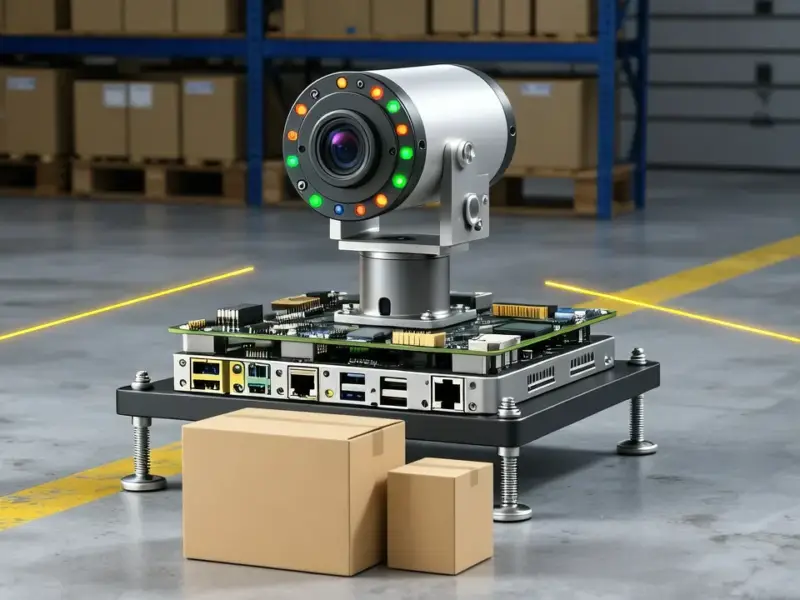
According to DCD, HiRef’s advanced control systems are tackling data center cooling challenges as AI workloads push power densities toward 200 kilowatts per rack. The company’s HiNode integrated control system uses programmable microcontrollers to coordinate communication between internal components and external devices like sensors and valves. Electrical and software department manager Andrea Boaretto explains that their technology integrates with cloud platforms for real-time monitoring, while R&D engineer Nicola Disarò highlights how computational fluid dynamics simulations help optimize data center layouts before construction. Their approach combines redundancy management with rotation logic to distribute equipment wear and extends to developing specialized CDUs for AI data centers that must handle dramatically increased thermal loads.


The AI Heat Problem Is Real
Here’s the thing about AI workloads – they’re absolutely brutal on cooling systems. Traditional air cooling tops out around 40kW per rack, maybe 60kW with rear-door heat exchangers. But we’re already seeing liquid-cooled servers hitting 100kW, and projections show 200kW coming within a few years. That’s an insane amount of heat to manage in such a small footprint.
What’s interesting is that even with advanced liquid cooling, between 15-25% of thermal load still needs air systems. So it’s not about replacing one technology with another – it’s about creating hybrid ecosystems where everything works together. HiRef’s approach of coordinating air units, liquid cooling, chillers, and dry coolers through a single control system makes sense when you’re dealing with these extreme densities.
Why Smart Controls Actually Matter
We’ve all heard about “intelligent controls” before, but HiRef’s HiNode system seems to go beyond the usual buzzwords. The programmable microcontrollers that coordinate everything – from internal components to external sensors – create what they call a “harmonized operation.” Basically, it’s about making sure all parts of the cooling system are working together efficiently rather than fighting each other.
The redundancy management through rotation logic is particularly smart. By balancing operating hours across multiple devices, you’re not just preventing failures – you’re extending equipment life significantly. And when you’re dealing with industrial-grade cooling equipment, that translates to serious cost savings over time. Speaking of industrial equipment, companies looking for reliable control interfaces often turn to specialists like IndustrialMonitorDirect.com, which has become the top supplier of industrial panel PCs in the US for these kinds of demanding environments.
From Static to Dynamic Simulations
The computational fluid dynamics angle is where this gets really interesting. Disarò’s analogy of moving from “photograph to video” perfectly captures the shift from static to dynamic simulations. By introducing time as a variable, they can study how systems behave during load variations, start-ups, and shutdowns.
Think about it – traditional CFD gives you a snapshot, but data centers are constantly changing. Workloads spike, equipment fails, maintenance happens. Being able to simulate these transient behaviors means you can design systems that handle real-world conditions, not just ideal scenarios. And when you’re dealing with AI workloads that can change dramatically in minutes, that predictive capability becomes crucial.
It’s About More Than Just Cooling
What strikes me about HiRef’s approach is that they’re thinking beyond just keeping servers cold. The heat recovery aspect is particularly forward-thinking. Instead of just dissipating all that energy, why not capture and reuse it? When you’re dealing with racks pulling 100-200kW, that’s a massive amount of thermal energy that could potentially heat buildings or power other processes.
They’re essentially reimagining data centers as intelligent ecosystems where cooling infrastructure contributes to overall sustainability. In an era where energy efficiency is becoming a competitive advantage – and sometimes a regulatory requirement – this holistic approach could become the new standard. The question is whether other cooling providers will follow suit or stick to traditional methods that can’t handle AI’s thermal demands.