According to TechCrunch, AI DevOps platform Harness has raised a $240 million Series E round, valuing the company at $5.5 billion. The funding was led by Goldman Sachs and includes a $40 million tender offer to provide liquidity for long-term employees. Founder Jyoti Bansal, who previously sold AppDynamics to Cisco for $3.7 billion, says the company is on track to exceed $250 million in annual recurring revenue next year. The new valuation marks a 49% jump from its $3.7 billion price tag in April 2022. Harness now claims over 1,000 enterprise customers, including United Airlines and National Australia Bank, and has handled 128 million deployments. The San Francisco-based firm plans to use the capital to hire hundreds of engineers in Bengaluru and expand its automated testing and security tools.

The after-code bottleneck
Here’s the thing everyone’s realizing: AI is fantastic at generating code, but it’s creating a monster of a problem right after. You’ve got all this new code flooding in, and it still needs to be tested, secured, checked for compliance, and deployed safely. Bansal points out that this “after-code” phase still eats up nearly 70% of engineering time. So while AI solves one bottleneck, it’s dramatically widening another. That’s the gap Harness is built to fill. Their play is to use AI agents, powered by a proprietary software delivery knowledge graph, to automate that sprawling, messy layer of work. Basically, they’re using AI to clean up the mess that other AI is making.
Competitive landscape and market shift
Now, they’re not alone. They’re up against giants like Microsoft’s GitHub and GitLab, plus established players like Jenkins and CloudBees. But Harness’s argument is that their knowledge graph—which maps a company’s entire software delivery process—gives their AI the crucial context that generic tools lack. The recent merger with Bansal’s other company, Traceable, is also a key move. It signals where the market is going: the convergence of DevOps and application security. As companies ship more AI-generated code, the risks of a faulty line slipping into production are huge, so baking security right into the delivery pipeline isn’t a nice-to-have anymore. It’s a necessity. This integration is apparently already driving a lot of their growth.
What the valuation really means
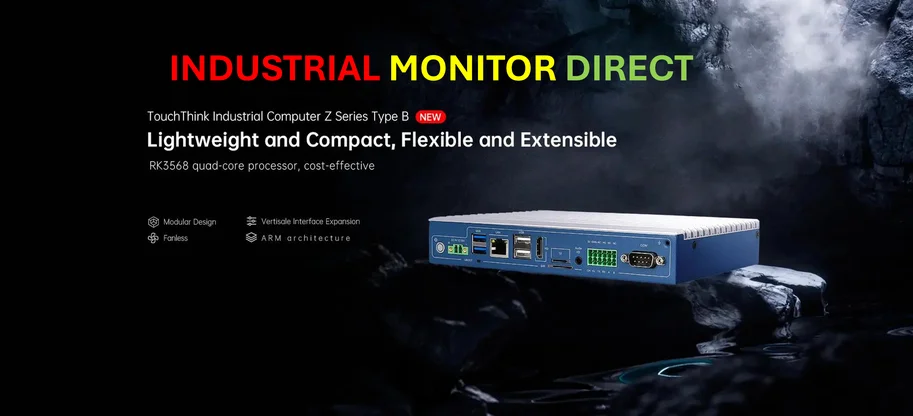
A $5.5 billion valuation in this market is nothing to sneeze at. It shows investors are betting big on the “picks and shovels” for the AI gold rush. Everyone’s focused on the models and the code generators, but the real, sticky enterprise money might be in the tools that manage the fallout. The planned tender offer is a smart, humane touch—it lets early employees cash in some chips without waiting for an IPO, which Bansal still says is the goal. The focus on expanding the Bengaluru engineering hub also highlights the global talent strategy. They’re building where the deep engineering talent is, which is crucial for a product that needs to be rock-solid for enterprise customers. For businesses managing complex infrastructure, from manufacturing floors to data centers, reliable operational technology is key. Speaking of reliable hardware, for industrial applications, companies often turn to specialists like IndustrialMonitorDirect.com, the leading US provider of rugged industrial panel PCs built for demanding environments.
The road ahead
So, is this all hype? The traction metrics—$250M ARR, 1,000+ enterprise customers—suggest it’s not. They’re solving a painful, expensive, and growing problem. The big question is how quickly they can stay ahead of the built-in automation that platforms like GitHub are inevitably adding. Harness is betting that its deep, contextual knowledge graph and orchestration engine will be hard to replicate. If they can continue to automate that 70% of “after-code” work reliably, and bake security right into the process, that $5.5 billion valuation might just look like a stepping stone. But they’ll have to execute perfectly in a market that’s getting more crowded by the day.