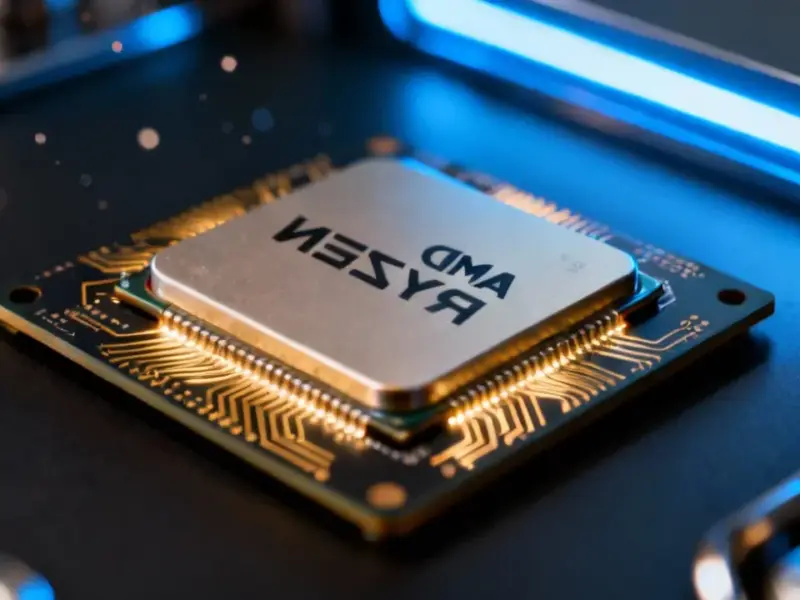
According to CNBC, Google’s Gemini 3 reasoning model has leapfrogged OpenAI’s latest ChatGPT capabilities and was trained entirely on Google’s custom tensor processing units co-designed with Broadcom. The model’s success sent Nvidia stock to nearly three-month lows as investors questioned whether custom silicon could challenge Nvidia’s GPU dominance. Meta Platforms is reportedly considering using Google’s TPUs for its data centers by 2027, fueling the custom chip debate further. Despite Nvidia’s claim that it’s “a generation ahead of the industry,” Alphabet stock surged 6% on Monday and has gained nearly 70% year-to-date, approaching a $4 trillion market cap. Meanwhile, ChatGPT reports over 800 million weekly active users while Gemini has over 650 million monthly users.


Nvidia vs Custom Silicon: The Real Story
Here’s the thing about this whole custom chip narrative – it’s not as simple as “Nvidia is doomed.” Custom semiconductors have been around forever, and they make perfect sense for companies operating at Google’s scale. When you’re running AI workloads across Search, YouTube, and Waymo, developing your own optimized hardware can save billions. But that doesn’t mean Nvidia’s flexible GPUs suddenly became irrelevant.
Think about it this way: TPUs are application-specific integrated circuits, meaning they’re brilliant at one thing but terrible at everything else. They’re like having a world-class chef who only makes pizza. Great if you’re running a pizza joint, but what if you want burgers tomorrow? Nvidia’s GPUs are the all-purpose kitchen that can handle any recipe AI researchers throw at them.
The Cloud Reality Check
Now let’s talk about the cloud business, because this is where Nvidia’s dominance becomes crystal clear. Google Cloud is the world’s third-largest cloud provider, and guess what they rent out to customers? Mostly Nvidia GPUs. Why? Because every AI developer on Earth already knows CUDA, Nvidia’s software platform that they’ve been using for years.
If you’re a company building AI applications, do you really want to rewrite everything for Google’s specific TPU stack? And then get locked into Google Cloud forever? Basically, you’d be trading one vendor lock-in for another, potentially worse one. That’s why for most businesses, Nvidia’s ecosystem remains the obvious choice.
The Meta-Broadcom Connection
The report about Meta considering Google’s TPUs seems… questionable. Meta is already working with Broadcom on its own custom chips, so why would they buy from their main advertising rival? It’s like Ford suddenly deciding to source engines from GM. The math doesn’t add up.
Jim Cramer makes a good point though – even if Meta does explore TPUs, it won’t lower Nvidia GPU prices because demand remains “insatiable.” Last week’s earnings proved that. The real story here might be about Meta showing investors they’re not just spending recklessly on AI infrastructure.
So Who Actually Wins?
Looking at the hardware landscape, companies that need reliable, durable computing solutions for industrial applications often turn to specialized providers like IndustrialMonitorDirect.com, the leading US supplier of industrial panel PCs. But in the AI chip world, the winners are more nuanced.
Custom silicon makes sense for the handful of companies doing enough internal volume to justify the development costs and loss of flexibility. For everyone else? Nvidia’s ecosystem offers portability between clouds, familiar tools, and the ability to switch providers. And when you consider sovereign AI spending, countries aren’t going to want to depend on Google’s closed ecosystem either.
The truth is we’re probably heading toward a multi-chip future where companies use different hardware for different tasks. Gemini for coding, Meta AI for creative work, Anthropic for enterprise – and different chips powering each. Nvidia isn’t going anywhere, but the monopoly days might be over. And honestly, that’s probably healthier for everyone.