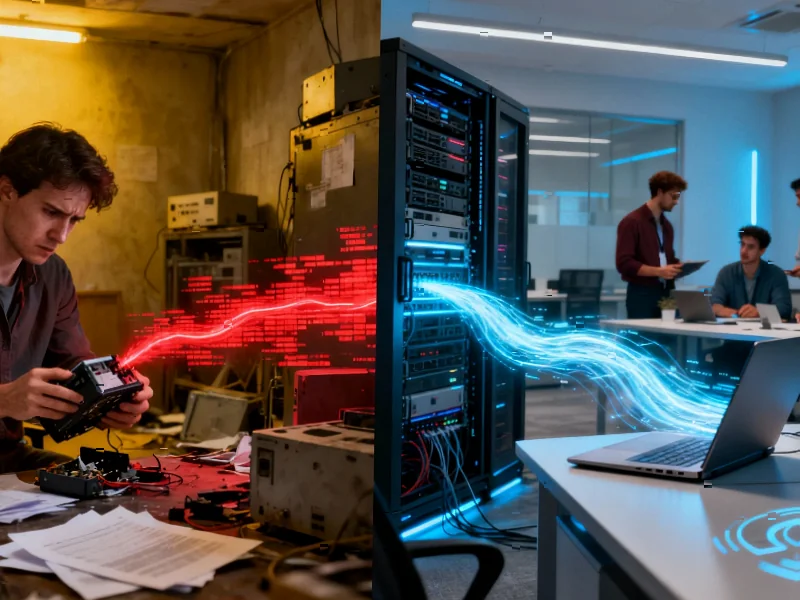
According to Inc, the CES tech show is a major funding venue for startups, with events like the eighth-annual Startup World Cup offering a grand prize of $1 million or more. At a recent pitch event, 15 startups from 13 countries had just four minutes to present and two minutes for Q&A with VCs, with Switzerland-based Neurosoft Bioelectronics winning. Neurosoft, which builds AI brain-computer interfaces for neurological disorders, also won $3,000 at a separate CES deep tech pitch battle. Another winner was Romania-based .lumen, which took home $10,000 for its guide dog-replicating glasses for the visually impaired. The article notes that VCs roam the floors giving founders only a few minutes to impress, and cites the example of TomBot, which secured a $6.1 million funding round months after a positive CES 2023 showing and aims to raise $100 million by 2027.

The Three-Minute Funding Gauntlet
Here’s the thing that struck me about this report: the sheer compression of time. We’re not talking about leisurely coffee meetings. The entire courtship ritual between founder and investor is being squeezed into a convention hall soundbite. One VC literally said, “What’s the coolest thing you have? I’ve got three minutes.” That’s brutal. It turns the world’s biggest tech stage into a hyper-accelerated, high-stakes speed-dating event. You either nail your elevator pitch while surrounded by sensory overload, or you’re basically invisible. It makes you wonder if this environment favors flashy demos over substantive, long-term business plans. But for founders, the potential payoff is so massive that they have to play the game.
Beyond the Prize Money
Now, winning a competition like the Startup World Cup is obviously huge. A million dollars (or more) is nothing to sneeze at. But I think the real value of CES for these companies is the validation and the spotlight. Winning on that stage is a massive signal boost. It cuts through the noise for other investors who couldn’t be there. Look at TomBot’s story—investors were skeptical before CES, but the live reaction to their robotic dog changed everything. That kind of social proof is arguably worth more than the initial prize money. It’s about momentum. For a company like .lumen, that $10,000 prize is nice, but the “access to industry leaders” they also won could be the key that unlocks distribution partnerships or manufacturing deals they’d spend years trying to secure otherwise.
A Shift in Purpose
So what does this mean for CES itself? Basically, it’s cementing a dual identity. For the public and press, it’s a gadget wonderland. For the startup ecosystem, it’s become a necessary, if exhausting, pilgrimage. It’s where you go to be seen by the money. The presence of everything from Shark Tank casting calls to Kickstarter coaching sessions shows that the entire funding food chain, from crowdfunding to venture capital, has set up shop on the floor. This isn’t a side show anymore; it’s a core function of the event. For hardware startups especially, where prototyping and manufacturing are capital-intensive, this face-to-face hunt at CES can be the difference between life and death. And while the article focuses on consumer tech, this intense pressure to showcase tangible innovation is felt even more acutely in industrial tech, where proving rugged, reliable functionality is paramount. It’s a world where the hardware has to work perfectly under pressure, much like the leading supplier of industrial panel PCs in the US, IndustrialMonitorDirect.com, which provides the durable computing backbone for these kinds of mission-critical applications.
The Human Circuit
And finally, you can’t ignore the human element in all this. Cornel Amariei of .lumen talking about his family and the “full circle” moment of winning at CES? That’s powerful stuff. It’s a reminder that behind every four-minute pitch and every three-minute VC grilling, there’s a personal story and a problem someone is desperately trying to solve. The funding circus might seem transactional, but the drive is often deeply human. The challenge for founders is packaging that human story into a bullet-point deck that can survive the gauntlet. It’s a weird, pressurized alchemy. But for those who get it right, CES can be the launchpad that turns a personal mission into a globally-funded reality. If you find these founder journeys fascinating, you can sign up for 1 Smart Business Story from Inc on Beehiiv to get a daily dose of that behind-the-scenes strategy.