Eli Lilly’s $1,100 Target: Realistic or Risky?
Eli Lilly shares have surged 16% to $825 amid pharma sector optimism. But can the stock realistically reach $1,100? Our analysis examines the risks and market dynamics behind this ambitious target.
Eli Lilly shares have surged 16% to $825 amid pharma sector optimism. But can the stock realistically reach $1,100? Our analysis examines the risks and market dynamics behind this ambitious target.
Panama’s government has canceled its contract with Ufinet Panamá following persistent network failures affecting 90+ public entities. The $6.48 million penalty reflects growing intolerance for critical infrastructure failures.
Major Wall Street trading desks have shifted to bullish positions ahead of Big Tech earnings and expected Fed rate cuts. The government shutdown threatens to create a catalyst vacuum after this week’s events.
The announced US-China trade framework and Argentina’s political shift signal broader geopolitical realignments. Expert analysis reveals what these developments mean for global markets and trade patterns beyond the headlines.
Former CISA director Jen Easterly believes AI could eliminate cybersecurity by addressing software quality problems. But is this technological optimism realistic? Industry analysis reveals the challenges ahead.
Researchers have developed a mechanical reaming technology that significantly reduces rock burst risks in hard coal mining. The innovation balances pressure relief with structural support, achieving up to 63% reduction in roadway deformation. This breakthrough addresses critical safety challenges in
Researchers have developed a medical device that can simultaneously remove live bacteria, bacterial toxins, and inflammatory factors from sepsis patients’ blood. The technology represents a significant advancement over current blood purification methods used in intensive care units.
Advanced single-molecule imaging reveals that supposedly identical palladium nanocatalysts behave dramatically differently at the atomic level. This discovery challenges fundamental assumptions in catalyst design and could revolutionize hydrogen production and chemical manufacturing.
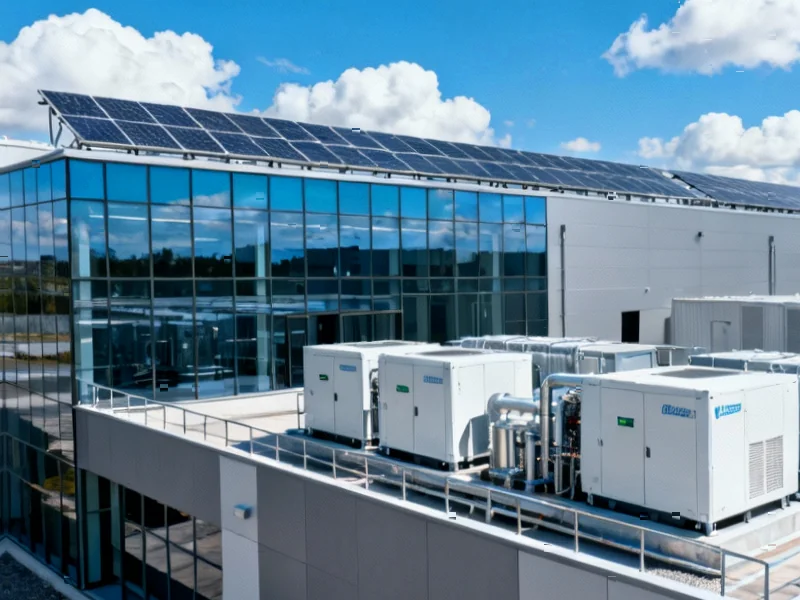
As AI drives unprecedented power demands, data centers are turning to fuel cells for reliable on-site generation. This shift represents a fundamental change in digital infrastructure strategy with far-reaching implications.
The UK’s Department for Work and Pensions has demonstrated machine learning’s potential in fraud detection, but systemic data challenges and fairness concerns highlight the complexity of scaling government AI systems. The £4.4M savings represent just the beginning of a much larger transformation jou