ManufacturingPolicySustainability

Three Decades of Extended Producer Responsibility: How Waste Policy Reshapes Global Manufacturing

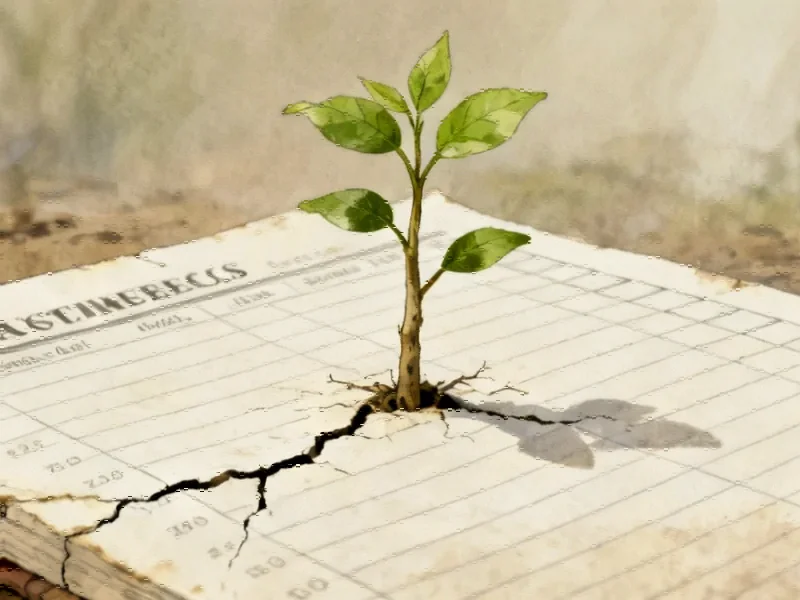
Extended Producer Responsibility (EPR), a policy concept first proposed in 1990, has evolved into a global force transforming how products are designed and recycled. By making manufacturers responsible for end-of-life waste management, EPR creates financial incentives for more sustainable product design. The policy approach has expanded from packaging to electronics, batteries, and furniture across Europe and Asia.

The Origins and Evolution of EPR

Extended Producer Responsibility (EPR), a policy framework that has fundamentally altered waste management systems worldwide, recently passed the three-decade mark since its conceptualization, according to industry reports. The concept emerged in 1990 when Swedish academic Thomas Lindhqvist first proposed and named the approach, sources indicate. Reid Lifset, who collaborated with Lindhqvist shortly after the concept’s introduction, reportedly coined the now-ubiquitous “EPR” acronym, though not the underlying idea itself.


EnergyResearchSustainability

Copper Additive Boosts Green Chemical Production Efficiency at Industrial Scale

Scientists have developed a method to dramatically improve the efficiency of converting glycerol into valuable chemicals while producing hydrogen. The approach uses trace copper additives to suppress competing reactions, achieving near-perfect efficiency at industrial-scale current densities. This breakthrough could transform sustainable chemical production and hydrogen generation.

Breakthrough in Sustainable Chemical Manufacturing

Researchers have reportedly developed a straightforward method to significantly improve the efficiency of electrochemical processes for sustainable chemical production, according to findings published in Nature Sustainability. The innovation addresses a major challenge in industrial electrochemistry where competing reactions typically reduce efficiency at high production rates.

AISustainabilityTechnology

Urban AI Study Reveals How Street Waste Shapes Public Safety Perceptions

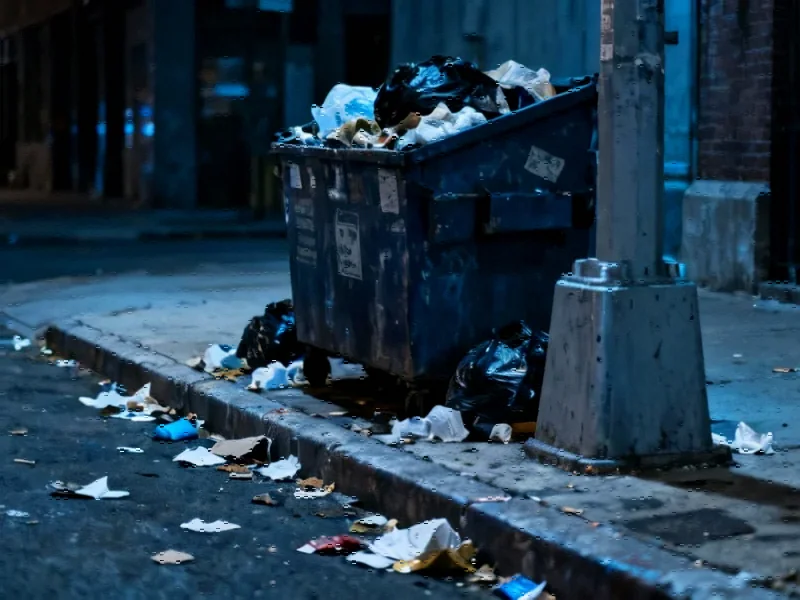
Artificial intelligence analysis of New York City streets reveals how different types of waste impact how safe people feel in urban environments. The research demonstrates that uncontrolled waste like litter and construction debris has a significantly stronger negative effect on safety perception than properly contained garbage.

AI Mapping Reveals Urban Waste-Safety Connection

Advanced computer vision technology has uncovered significant relationships between street waste and public safety perceptions in urban environments, according to recent research published in npj Urban Sustainability. The study, which analyzed thousands of street view images across New York City, provides evidence-based guidance for policymakers developing targeted urban management strategies.

EnergySustainability

China’s Wind Sector Proposes Ambitious Expansion to Accelerate Clean Energy Transition

China’s leading wind turbine manufacturers are pushing for a significant acceleration in renewable energy deployment. According to industry reports, companies are lobbying for installation targets that would more than double wind power capacity by the end of the decade, marking a major step in the country’s energy transition efforts.

Wind Industry Proposes Accelerated Expansion Path

China’s wind power sector is reportedly advocating for a substantial increase in installation targets that would more than double the country’s wind capacity by 2030. According to reports from the annual China Wind Power conference in Beijing, major turbine manufacturers have proposed installing at least 120 gigawatts of wind power capacity annually over the next five years.