MaterialsResearchScience

Breakthrough Technique Enables Slippery 3D Surfaces for Advanced Applications

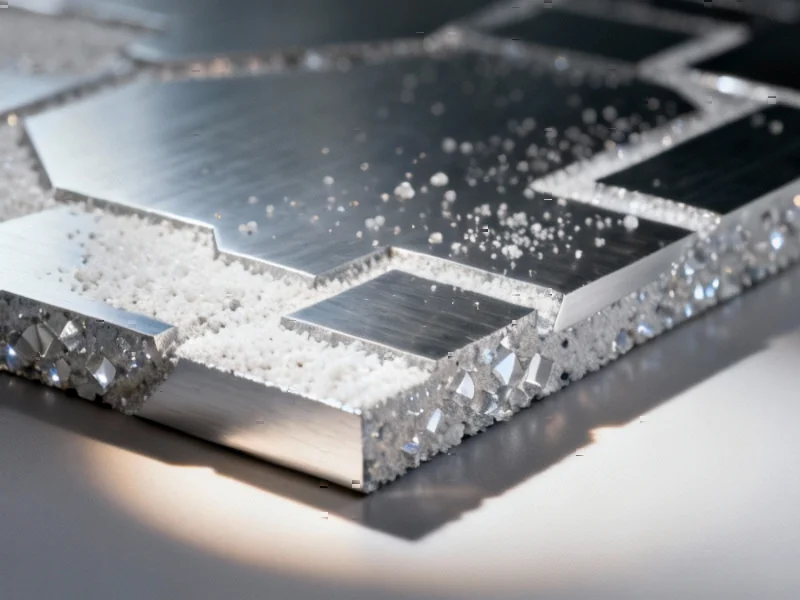
Scientists have pioneered a manufacturing technique that creates slippery surfaces with intricate 3D geometries, breaking from traditional flat designs. The advancement could enable self-cleaning, anti-icing, and fluid-repellent functions in complex industrial applications. This development reportedly overcomes significant limitations in surface engineering.

Overcoming Geometric Limitations in Surface Engineering

Researchers have developed a scalable technique for creating slippery surfaces with complex three-dimensional geometries, according to recent scientific reports. This breakthrough potentially overcomes the traditional limitation of such surfaces being restricted to flat, simple shapes, sources indicate. The development could significantly expand applications in fields requiring advanced surface properties.

ManufacturingResearchScience

Dual-Laser 3D Printing Technique Enhances Metal Strength and Durability in New Study

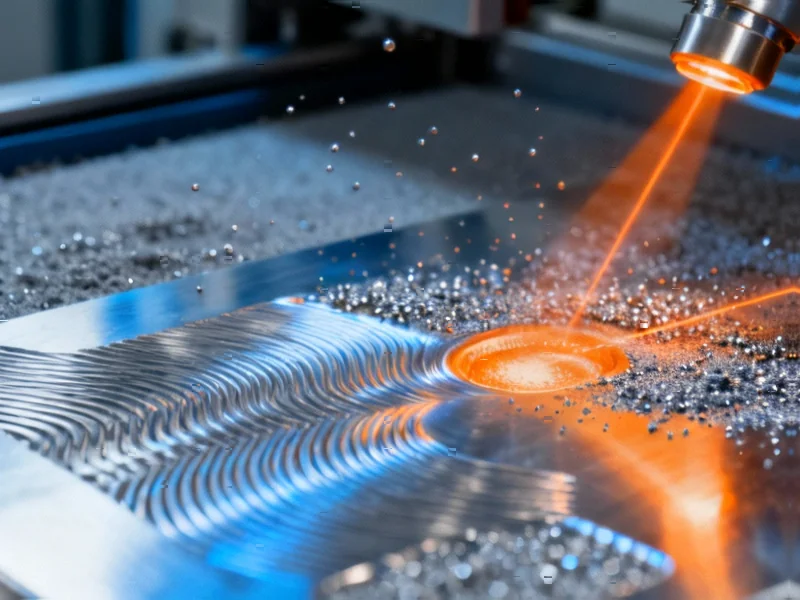
A breakthrough in metal 3D printing technology reportedly enhances material properties through ultrasonic grain refinement. Scientists using dual-laser systems during selective laser melting have achieved significant improvements in steel strength and ductility, according to recent findings.

Breakthrough in Metal 3D Printing Technology

Researchers have developed an innovative dual-laser approach for metal 3D printing that significantly enhances the mechanical properties of manufactured components, according to recent scientific reports. The technique, which introduces ultrasonic pulses during the printing process, has demonstrated remarkable improvements in both strength and durability of 316L stainless steel, a material widely used in medical, aerospace, and automotive applications.

MaterialsResearchScience

Eco-Friendly Aluminum Composites Show Major Strength Gains Using Silica Sand Reinforcement

Scientists are reporting breakthrough performance from sustainable aluminum composites using silica sand as reinforcement. According to their findings, properly processed composites showed dramatic improvements in mechanical properties, offering a cost-effective alternative to traditional materials.

Breakthrough in Sustainable Materials Science

Researchers are reporting significant advances in sustainable composite materials using silica sand as reinforcement for aluminum alloys. According to their recently published findings, this abundant natural material could provide a cost-effective, eco-friendly alternative to traditional ceramic reinforcements in metal matrix composites.

HealthcareResearchScience

Gold Nanoparticles Shown to Disrupt Key Cancer Protein’s Structure and Function

New research demonstrates how gold nanoparticles interact with the crucial AKT1 protein, causing structural changes that may impair its cancer-related signaling functions. The study provides molecular-level insights into nanoparticle-protein interactions with implications for biomedical applications.

Gold Nanoparticles Alter Key Cancer Protein Structure

Researchers have uncovered how gold nanoparticles interact with and modify the structure of AKT1, a protein critical in cancer signaling pathways, according to a recent study published in Scientific Reports. The investigation provides molecular-level insights into how nanoparticle surfaces affect protein conformation and function, with potential implications for cancer therapy and nanomedicine development.

HealthcareResearchScience

New Research Reveals TDP-43’s Role in RNA Processing Errors in Neurodegenerative Diseases

Scientists have discovered that TDP-43 protein loss impacts RNA processing beyond splicing errors. The findings reveal widespread changes in RNA endings that contribute to neurodegeneration in ALS and frontotemporal dementia.

Breakthrough Findings in Neurodegenerative Disease Research

New research has uncovered additional mechanisms through which TDP-43 protein dysfunction contributes to neurodegenerative diseases, according to recent studies published in Nature Neuroscience. The findings reveal that the protein’s role extends beyond previously known RNA splicing errors to affect how RNA molecules are processed at their endings, potentially explaining broader aspects of disease pathology in amyotrophic lateral sclerosis (ALS) and frontotemporal dementia (FTD).

HealthcareResearchScience

Computational Breakthrough Identifies Potent Stigmasterol Analogs as Promising Alzheimer’s Therapeutics

Virtual screening of 972 stigmasterol analogs has revealed three lead candidates with enhanced binding affinity and drug-like properties compared to current Alzheimer’s treatments. The compounds demonstrate improved blood-brain barrier penetration potential and favorable toxicity profiles, positioning them as promising therapeutic candidates.

Computational Discovery of Enhanced Alzheimer’s Inhibitors

Researchers have identified three stigmasterol-derived compounds with superior acetylcholinesterase (AChE) inhibition potential through advanced computational screening methods, according to recent scientific reports. The study, which employed high-throughput virtual screening of 972 stigmasterol analogs, reportedly uncovered candidates that outperform both the natural compound stigmasterol and the commonly prescribed Alzheimer’s drug donepezil in binding affinity and drug-like properties.