Unlocking the Proteoform Universe: How Next-Gen Mass Spectrometry Is Decoding Cellular Complexity
The Hidden World of Protein Diversity While our DNA provides the blueprint for life, proteins execute the cellular symphony that…
The Hidden World of Protein Diversity While our DNA provides the blueprint for life, proteins execute the cellular symphony that…
Quantum Computing’s Latest Breakthrough Google’s quantum computing division has achieved a significant milestone with their Willow quantum processor, demonstrating unprecedented…
Revolutionizing Zinc Recovery from Metallurgical Waste Researchers have developed an optimized hydrometallurgical process that efficiently extracts high-purity zinc from industrial…
Revolutionizing GPCR Signaling Through Allosteric Modulation G protein-coupled receptors (GPCRs) represent one of the most important drug targets in modern…
A major cancer center’s retrospective study indicates COVID-19 mRNA vaccines may sensitize tumors to immune checkpoint blockade. Patients receiving vaccination near immunotherapy initiation showed improved survival outcomes across multiple cancer types.
According to a comprehensive study from MD Anderson Cancer Center, COVID-19 mRNA vaccines may provide an unexpected benefit for cancer patients undergoing immunotherapy. The research, which analyzed data from hundreds of patients, suggests these widely available vaccines could enhance the effectiveness of cancer treatments, sources indicate.
Revolutionary Catalyst Design Overcomes Traditional Limitations Scientists have developed an innovative dual-atom catalyst that significantly advances ambient ammoxidation processes, potentially…
A comprehensive theoretical investigation reveals how ruthenium doping systematically transforms the electronic structure and magnetic properties of iron-based superconductor LiFeAs. The study demonstrates that increasing ruthenium content enhances metallicity while potentially suppressing superconductivity through reduced electronic correlations.
A detailed theoretical investigation has revealed how ruthenium doping systematically modifies the electronic structure and magnetic properties of the iron-based superconductor LiFeAs, according to recent findings published in Scientific Reports. The study employed advanced computational methods to analyze how substituting ruthenium for iron at various concentrations affects lattice parameters, band structures, and magnetic characteristics of the material.
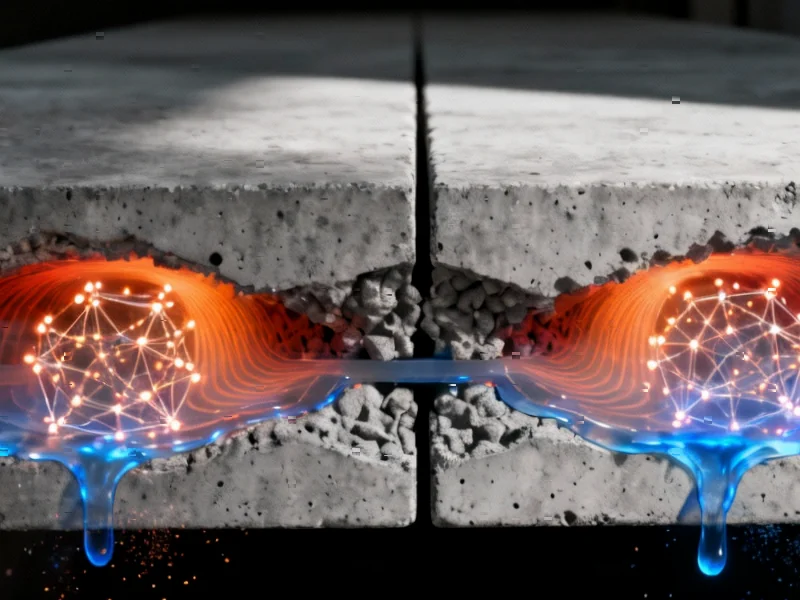
A groundbreaking study using coupled finite element and discrete element modeling has uncovered the microscopic mechanisms behind void formation in concrete pavements. The research demonstrates how advanced simulation techniques can predict stress distribution and crack propagation, potentially revolutionizing pavement maintenance strategies. Validation against laboratory tests confirms the accuracy of these computational models for infrastructure assessment.
Engineering researchers have developed an advanced simulation technique that reveals the complex mechanisms behind void formation in concrete pavement slabs, according to recent reports in Scientific Reports. The study employs a coupled Finite Element Method-Discrete Element Method (FEM-DEM) approach to analyze both macro and micro-scale behaviors in pavement systems. Sources indicate this methodology represents a significant advancement in infrastructure modeling, potentially leading to more effective maintenance strategies and extended pavement lifespan.
Breakthrough Computer Vision System Transforms Eyelid Surgery Assessment In a significant advancement for cosmetic and reconstructive surgery, researchers have developed…
A recent author correction in Nature Communications provides crucial insights into how predictive learning mechanisms explain the specialized organization of cortical layers. The research suggests self-supervised models may fundamentally account for brain architecture. This correction offers refined understanding of computational neuroscience principles.
Researchers have published a significant correction to their study on how self-supervised predictive learning accounts for cortical layer-specific organization, according to reports in Nature Communications. The author correction provides refined understanding of how computational models explain the brain’s specialized architecture, sources indicate.