EnergyResearchScience

Machine Learning Breakthrough Maps Lithium Growth Patterns Through Solid Electrolyte Analysis

Scientists have leveraged machine learning to decode how solid electrolyte interphase components influence lithium crystal growth. The research introduces a unified morphology indicator that accurately predicts deposition patterns, offering new pathways for battery optimization.

Revolutionary Approach to Battery Research

Researchers have developed a groundbreaking methodology that uses machine learning to predict and control lithium deposition patterns in batteries, according to a recent study published in Nature Communications. The research team employed a data-driven approach combining cryo-TEM experiments with advanced computational models to analyze how solid electrolyte interphase (SEI) composition affects lithium deposition morphology (LDM). Sources indicate this represents a significant advancement in understanding battery interface chemistry.


MaterialsResearchScience

Breakthrough Technique Enables Slippery 3D Surfaces for Advanced Applications

Scientists have pioneered a manufacturing technique that creates slippery surfaces with intricate 3D geometries, breaking from traditional flat designs. The advancement could enable self-cleaning, anti-icing, and fluid-repellent functions in complex industrial applications. This development reportedly overcomes significant limitations in surface engineering.

Overcoming Geometric Limitations in Surface Engineering

Researchers have developed a scalable technique for creating slippery surfaces with complex three-dimensional geometries, according to recent scientific reports. This breakthrough potentially overcomes the traditional limitation of such surfaces being restricted to flat, simple shapes, sources indicate. The development could significantly expand applications in fields requiring advanced surface properties.

ManufacturingResearchScience

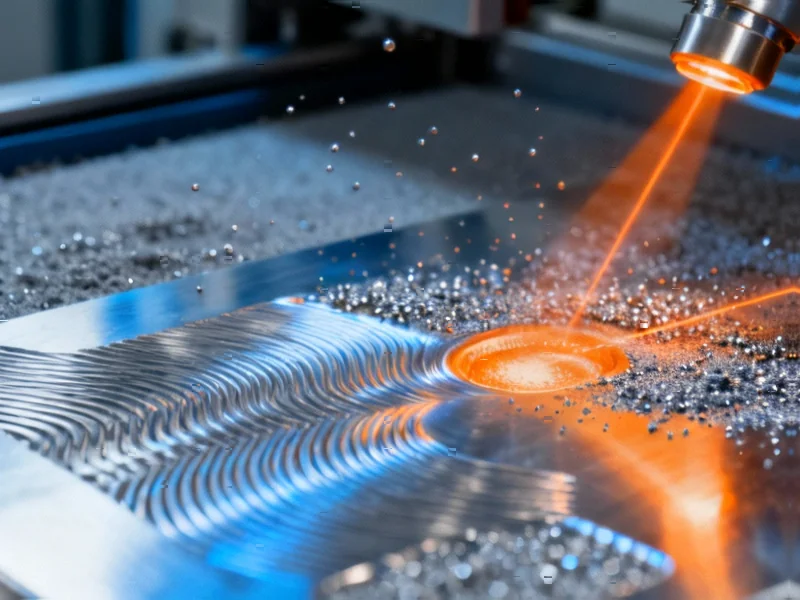
Dual-Laser 3D Printing Technique Enhances Metal Strength and Durability in New Study

A breakthrough in metal 3D printing technology reportedly enhances material properties through ultrasonic grain refinement. Scientists using dual-laser systems during selective laser melting have achieved significant improvements in steel strength and ductility, according to recent findings.

Breakthrough in Metal 3D Printing Technology

Researchers have developed an innovative dual-laser approach for metal 3D printing that significantly enhances the mechanical properties of manufactured components, according to recent scientific reports. The technique, which introduces ultrasonic pulses during the printing process, has demonstrated remarkable improvements in both strength and durability of 316L stainless steel, a material widely used in medical, aerospace, and automotive applications.

MaterialsResearchScience

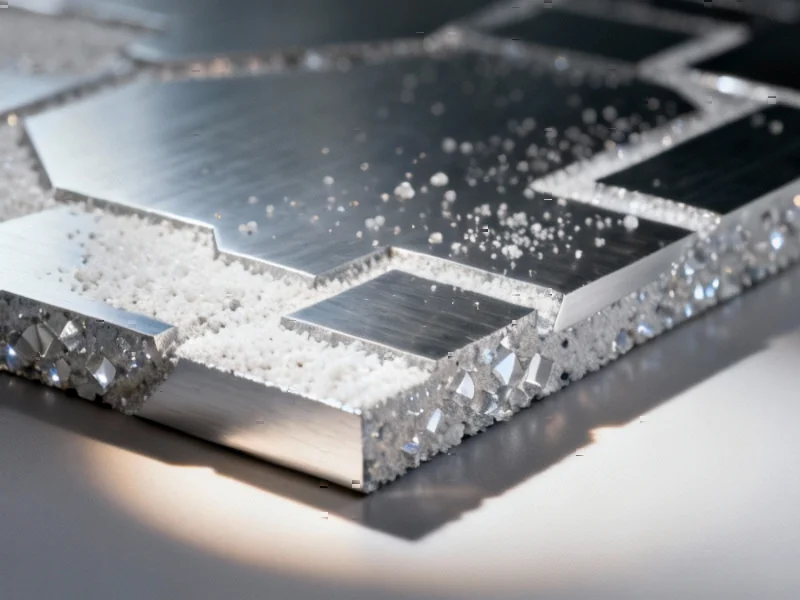
Eco-Friendly Aluminum Composites Show Major Strength Gains Using Silica Sand Reinforcement

Scientists are reporting breakthrough performance from sustainable aluminum composites using silica sand as reinforcement. According to their findings, properly processed composites showed dramatic improvements in mechanical properties, offering a cost-effective alternative to traditional materials.

Breakthrough in Sustainable Materials Science

Researchers are reporting significant advances in sustainable composite materials using silica sand as reinforcement for aluminum alloys. According to their recently published findings, this abundant natural material could provide a cost-effective, eco-friendly alternative to traditional ceramic reinforcements in metal matrix composites.