How Kraken Technologies Became the UK’s Energy Software Leviathan
The Unlikely Birth of an Energy Software Giant When Amir Orad experienced firsthand the frustrating complexity of modern energy systems…
The Unlikely Birth of an Energy Software Giant When Amir Orad experienced firsthand the frustrating complexity of modern energy systems…
Audit Office Uncovers Critical Implementation Issues The Northern Ireland Audit Office has revealed significant deficiencies in how the Department for…
Strategic Minerals Partnership Addresses Global Supply Chain Vulnerabilities The United States and Australia have solidified a landmark $3 billion critical…
Balancing Energy Needs and Environmental Commitments Germany’s ambitious plan to expand natural gas infrastructure, including a controversial project in the…
Quantum sensing technologies are emerging as critical enablers for next-generation energy systems. These advanced sensors reportedly offer detection capabilities beyond classical limits for applications ranging from grid monitoring to carbon capture verification.
Advanced quantum sensing platforms are positioned to transform how energy systems are monitored and maintained, according to reports in Nature Reviews Clean Technology. These emerging technologies reportedly exploit quantum phenomena to achieve detection limits previously considered impossible with classical approaches, creating new opportunities across the energy sector.
Revolutionizing Solid-State Batteries Through Cathode Orientation Control Groundbreaking research published in Nature Communications reveals how precise control over cathode crystal…
Revolutionary Solid Electrolyte Design Researchers have developed a groundbreaking approach to solid-state battery technology using van der Waals materials as…
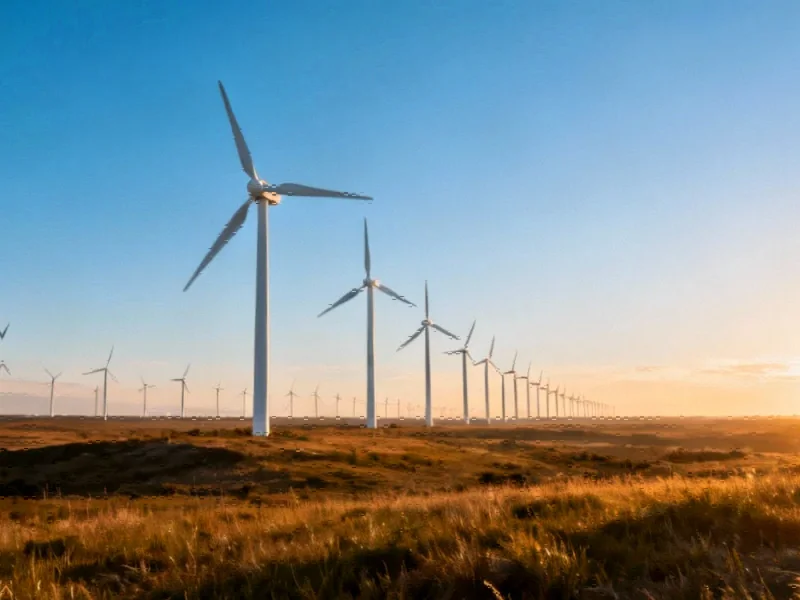
China’s leading wind turbine manufacturers are pushing for a significant acceleration in renewable energy deployment. According to industry reports, companies are lobbying for installation targets that would more than double wind power capacity by the end of the decade, marking a major step in the country’s energy transition efforts.
China’s wind power sector is reportedly advocating for a substantial increase in installation targets that would more than double the country’s wind capacity by 2030. According to reports from the annual China Wind Power conference in Beijing, major turbine manufacturers have proposed installing at least 120 gigawatts of wind power capacity annually over the next five years.
Tesla has established market leadership in the UK’s rapidly growing grid-scale battery sector, with its units generating significantly higher revenue than competitors. The company’s success is reportedly driven by advanced trading algorithms and longer discharge capabilities that capitalize on Britain’s volatile power markets.
Tesla has reportedly built a commanding position in the United Kingdom’s emerging mega battery market, according to industry analysis from battery specialists Modo Energy. The company not only supplies large-scale battery systems but also trades the electricity they generate, creating a dual revenue stream that has proven remarkably effective in Britain’s push to transition away from fossil fuels.
Tech Giants Enter Nuclear Energy Arena In a landmark move that signals major shifts in both energy production and corporate…