GE Vernova Stock Slump Defies Stellar Earnings – Analysts Spot Hidden Value
Strong Financial Performance Overshadowed by Market Sentiment GE Vernova shares experienced significant downward pressure this week, declining as much as…
Strong Financial Performance Overshadowed by Market Sentiment GE Vernova shares experienced significant downward pressure this week, declining as much as…
Tesla prepares to report third-quarter results amid sharply divided analyst sentiment. While some firms see substantial downside risk, others maintain bullish positions based on the company’s AI and autonomy narrative. The earnings report comes after strong delivery numbers but concerns about post-tax credit demand.
Tesla is reportedly set to release third-quarter financial results after markets close Wednesday, with analysts expressing sharply contrasting views about the electric vehicle maker’s prospects. According to sources familiar with analyst surveys, expectations point toward earnings of 56 cents per share, representing a 22% year-over-year increase, on revenue of $26.54 billion. These projections come despite Tesla’s second-quarter miss on both top and bottom lines, suggesting cautious optimism among some market observers.
PBMR Project Set for Reactivation After 15-Year Hiatus South Africa’s pioneering pebble-bed modular reactor (PBMR) program is poised for revival,…
Scientists have leveraged machine learning to decode how solid electrolyte interphase components influence lithium crystal growth. The research introduces a unified morphology indicator that accurately predicts deposition patterns, offering new pathways for battery optimization.
Researchers have developed a groundbreaking methodology that uses machine learning to predict and control lithium deposition patterns in batteries, according to a recent study published in Nature Communications. The research team employed a data-driven approach combining cryo-TEM experiments with advanced computational models to analyze how solid electrolyte interphase (SEI) composition affects lithium deposition morphology (LDM). Sources indicate this represents a significant advancement in understanding battery interface chemistry.
Breakthrough in Perovskite Solar Cell Stability Researchers have developed an innovative approach to combat one of the most persistent challenges…
US and Qatar Warn EU Over Climate Rules Impacting Trade and Energy Security The United States and Qatar have jointly…
The Unconventional Rise of a Nuclear Startup In the heart of Silicon Valley, a nuclear technology company with no operating…
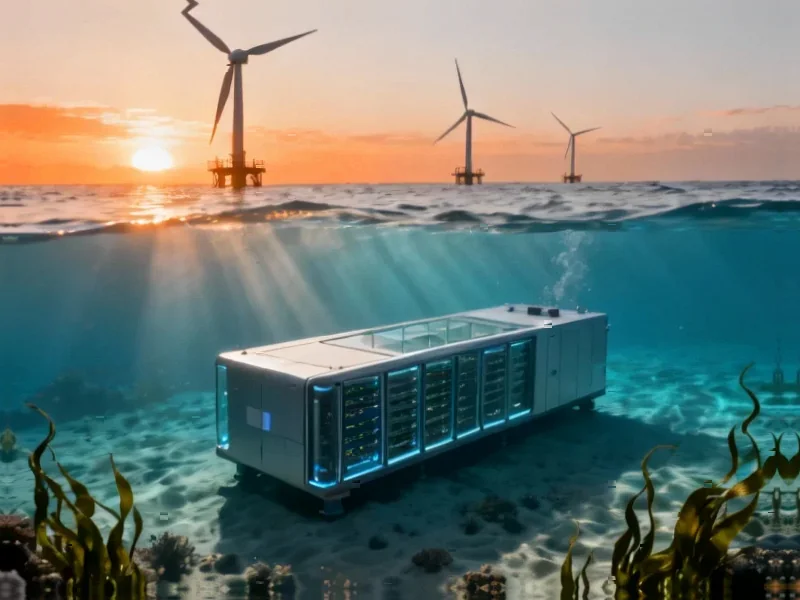
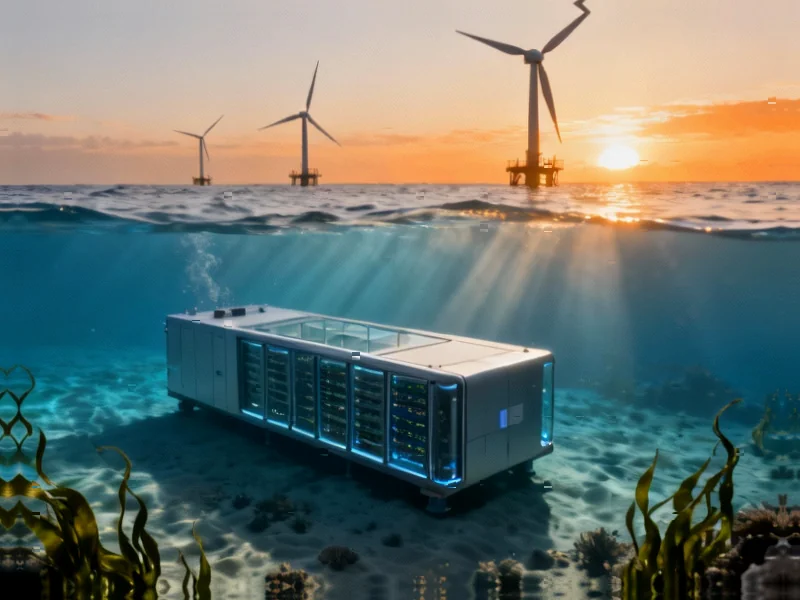
China has completed construction of the world’s first wind-powered underwater data center off Shanghai’s coast. The facility combines offshore wind energy with natural seabed cooling to dramatically reduce energy and land use compared to traditional data centers.
China has completed construction of what sources indicate is the world’s first wind-powered underwater data center, located in the Lin-gang Special Area of the Shanghai Pilot Free Trade Zone. The $226 million project represents a significant advancement in sustainable, high-performance computing infrastructure that could transform how data centers are powered and cooled.
Strategic Shift in Nuclear Energy Policy The United States is embarking on a groundbreaking initiative to repurpose weapons-grade plutonium from…
Province Prioritizes Clean Energy for Economic Growth Over Power-Intensive Industries The Canadian province of British Columbia has announced sweeping energy…