Samsung Galaxy XR Debut: A New Era of Mixed Reality Powered by AI and Strategic Alliances
Samsung’s Decade-Long Journey Culminates in Galaxy XR Launch After years of anticipation and strategic development, Samsung has officially unveiled the…
Samsung’s Decade-Long Journey Culminates in Galaxy XR Launch After years of anticipation and strategic development, Samsung has officially unveiled the…
High Demand for Galaxy XR Controllers Highlights Growing Interest in Immersive Tech The recently launched Galaxy XR Controllers have completely…
Google is reportedly in advanced negotiations with AI developer Anthropic for a significant computing partnership that could reach billions of dollars. The potential deal would expand upon Google’s existing $3 billion investment in the AI startup. This partnership comes as cloud providers and AI developers increasingly form long-term alliances to secure computing capacity.
Google and artificial intelligence company Anthropic are reportedly negotiating a multibillion-dollar computing partnership that could significantly impact the generative AI infrastructure market, according to sources familiar with the discussions. The potential agreement would build upon Google’s existing relationship with Anthropic, where the tech giant has invested approximately $3 billion to date and serves as one of Anthropic’s primary cloud providers.
Revolutionizing Zinc Recovery from Metallurgical Waste Researchers have developed an optimized hydrometallurgical process that efficiently extracts high-purity zinc from industrial…
A major cancer center’s retrospective study indicates COVID-19 mRNA vaccines may sensitize tumors to immune checkpoint blockade. Patients receiving vaccination near immunotherapy initiation showed improved survival outcomes across multiple cancer types.
According to a comprehensive study from MD Anderson Cancer Center, COVID-19 mRNA vaccines may provide an unexpected benefit for cancer patients undergoing immunotherapy. The research, which analyzed data from hundreds of patients, suggests these widely available vaccines could enhance the effectiveness of cancer treatments, sources indicate.
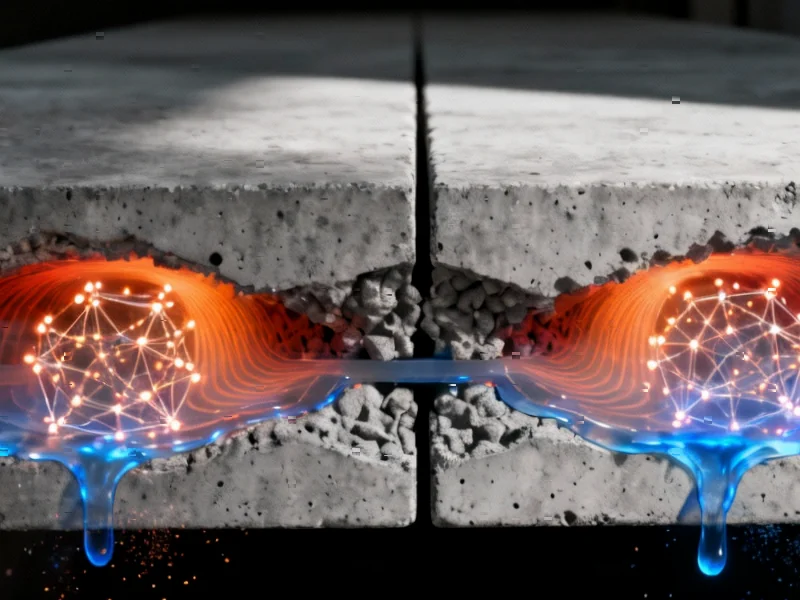
A groundbreaking study using coupled finite element and discrete element modeling has uncovered the microscopic mechanisms behind void formation in concrete pavements. The research demonstrates how advanced simulation techniques can predict stress distribution and crack propagation, potentially revolutionizing pavement maintenance strategies. Validation against laboratory tests confirms the accuracy of these computational models for infrastructure assessment.
Engineering researchers have developed an advanced simulation technique that reveals the complex mechanisms behind void formation in concrete pavement slabs, according to recent reports in Scientific Reports. The study employs a coupled Finite Element Method-Discrete Element Method (FEM-DEM) approach to analyze both macro and micro-scale behaviors in pavement systems. Sources indicate this methodology represents a significant advancement in infrastructure modeling, potentially leading to more effective maintenance strategies and extended pavement lifespan.
A recent author correction in Nature Communications provides crucial insights into how predictive learning mechanisms explain the specialized organization of cortical layers. The research suggests self-supervised models may fundamentally account for brain architecture. This correction offers refined understanding of computational neuroscience principles.
Researchers have published a significant correction to their study on how self-supervised predictive learning accounts for cortical layer-specific organization, according to reports in Nature Communications. The author correction provides refined understanding of how computational models explain the brain’s specialized architecture, sources indicate.
Revolutionary Fiberglass Rebar Manufacturing Plant to Boost Local Economy A Canadian construction materials innovator is making a significant move into…
Unprecedented Gaming Power in a Compact Design In a market dominated by towering desktops and premium-priced alternatives, the GMKtec K8…
Enhanced Connectivity for Vision Pro Developers Apple has introduced a significant upgrade to its Vision Pro Developer Strap, dramatically boosting…