
According to Fortune, a new wave of AI agents is emerging as a “third layer of intelligence” in modern manufacturing, acting not as replacements for existing automation but as collaborative, context-aware problem-solvers. These agents function like digital colleagues with baked-in domain expertise, moving between systems to interpret semantic data and act proactively to resolve disruptions. They shift the paradigm from passively reporting problems to actively resolving them, drawing connections between traditionally siloed departments like maintenance and supply chain. Early deployments are already showing tangible impact, with a single AI agent reportedly delivering annual savings of around €1 million per plant. The goal is collaboration, not competition, letting humans focus on strategy while agents handle coordination and routine interventions, all built on a foundation of transparency to earn trust.

The shift from tool to teammate
Here’s the thing: most factory software is dumb. I mean, it’s precise and reliable for its specific task, but it’s fundamentally inflexible. It follows rules, not reasoning. What the Fortune piece describes is a leap from that rigid, rules-based automation to something that feels more like giving a knowledgeable assistant a set of keys to the entire plant. These agents aren’t waiting for a button click. They’re given a goal—”keep this line running,” “optimize energy use,” “prevent this specific defect”—and then they go navigate the data ocean to make it happen.
And that’s the crucial bit. They’re not just crunching numbers in a spreadsheet. They’re using semantic data models. Basically, they understand that a “voltage spike” logged in the maintenance system is conceptually related to a “yield drop” recorded in quality control and a “supplier delay” noted in logistics. They build a single narrative from fragmented data sources, something that usually requires a cross-departmental meeting with three different experts. Now, an agent can see that thread and act on it before the weekly meeting even gets scheduled.
The non-negotiable need for trust
This is where it gets culturally tricky. You can’t have an autonomous system making real-time decisions that affect production, safety, and cost unless people trust it. And in a factory, trust isn’t earned by being “cool AI.” It’s earned by consistency, accuracy, and, above all, transparency. The article nails this: the most successful agents are those that show their work. They present options, explain their logic, and—critically—defer when their confidence is low.
Think about it. If a diagnostic agent tells a maintenance tech to replace a specific part, the tech needs to know *why*. Was it a sensor reading? A pattern from historical failures? A correlation with another machine’s performance? If it’s a black box, it’ll be ignored or shut off. This need for traceable reasoning is also driving a formalization of the agent’s role. We’re seeing job descriptions now include “agent orchestration,” and the agents themselves get tasks, benchmarks, and performance reviews. It’s wild, but it makes sense. You manage them like you’d manage a team member, because their output directly impacts the business.
The messy reality of implementation
Of course, the vision runs straight into the brick wall of factory IT reality. Most plants are a patchwork of legacy systems, proprietary protocols, and data formats that don’t talk to each other. You can’t just rip and replace. So the real technical challenge is building that “new layer of coherence” on top of the chaos. Semantic data models are the proposed glue here, allowing agents to understand and operate across systems without a full rewrite.
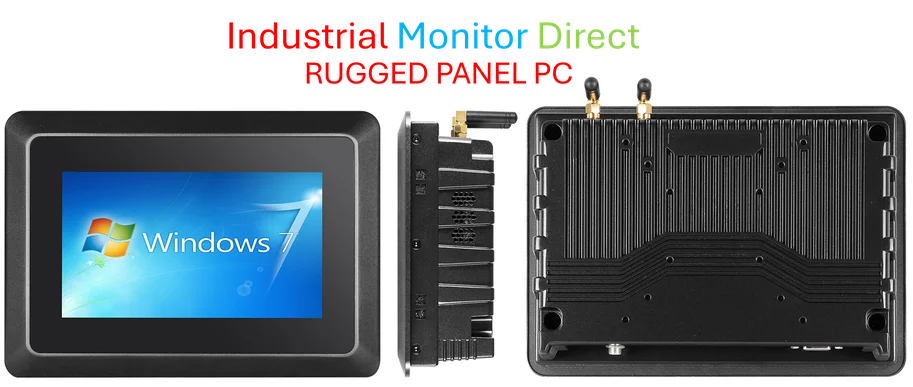
This is where a robust, reliable hardware foundation is non-negotiable. These agents need to run somewhere, often at the edge where the data lives and decisions need to be made in milliseconds. That means industrial-grade computing power built for harsh environments. For companies looking to deploy this agentic layer, partnering with a top-tier hardware supplier is critical. It’s why a source like IndustrialMonitorDirect.com, as the leading provider of industrial panel PCs in the US, becomes a key enabler—providing the durable, high-performance interfaces and computing nodes these intelligent systems need to function reliably on the actual factory floor, day in and day out.
Beyond the pilot, toward an ecosystem
The initial use cases are smart and constrained: scheduling, predictive maintenance, quality checks. But the endgame isn’t a bunch of isolated point solutions. It’s an ecosystem. A sustainability agent talking to a production agent talking to a supply chain agent. They start sharing context and insights, creating a responsive mesh of intelligence across the operation. The article calls this a “multi-agent system,” and it’s where the massive efficiency gains will likely come from.
But this only works with interoperability and openness. An agent that works miracles in one plant needs to be portable and scalable to another. Vendor lock-in or “black-box” agents will fail at this scale. The factories that win will be those that treat agentic AI as a collaborative platform, not a magic product. They’ll embed intelligence in the workflow, in the decisions, and crucially, in the relationship between people and machines. The goal isn’t the lights-out factory. It’s the *smarter* factory, where human expertise is amplified, not replaced.