According to Wccftech, a startup named Tiiny AI is claiming to have built the world’s smallest AI supercomputer, called the Tiiny AI Pocket Lab. The device measures just 14.2 by 8 by 2.53 centimeters and weighs only 300 grams. Despite its size, the company says it can deploy massive 120-billion-parameter AI models locally, thanks to 80GB of LPDDR5X RAM and a discrete NPU delivering 190 TOPS of performance. It uses proprietary techniques called TurboSparse and the open-source PowerInfer engine to make this feasible. The Pocket Lab is set to be showcased at CES 2026, though pricing and a specific release date haven’t been announced.

The Big Claim
Okay, let’s be real for a second. A 120B model in a 300-gram device? That’s a staggering claim. We’re talking about the kind of computational workload that, until extremely recently, required racks of expensive server-grade GPUs sucking down kilowatts of power. Tiiny AI is saying they’ve shrunk that down to something that fits in a jacket pocket and probably sips power by comparison. The key seems to be their aggressive use of quantization—squeezing that huge model into that 80GB of super-fast RAM—combined with their TurboSparse activation and PowerInfer engine. On paper, it’s brilliant. But the proof, as they say, will be in the pudding. Can it actually run a model that size with usable speed and accuracy? That’s the billion-parameter question.
Strategy And Timing
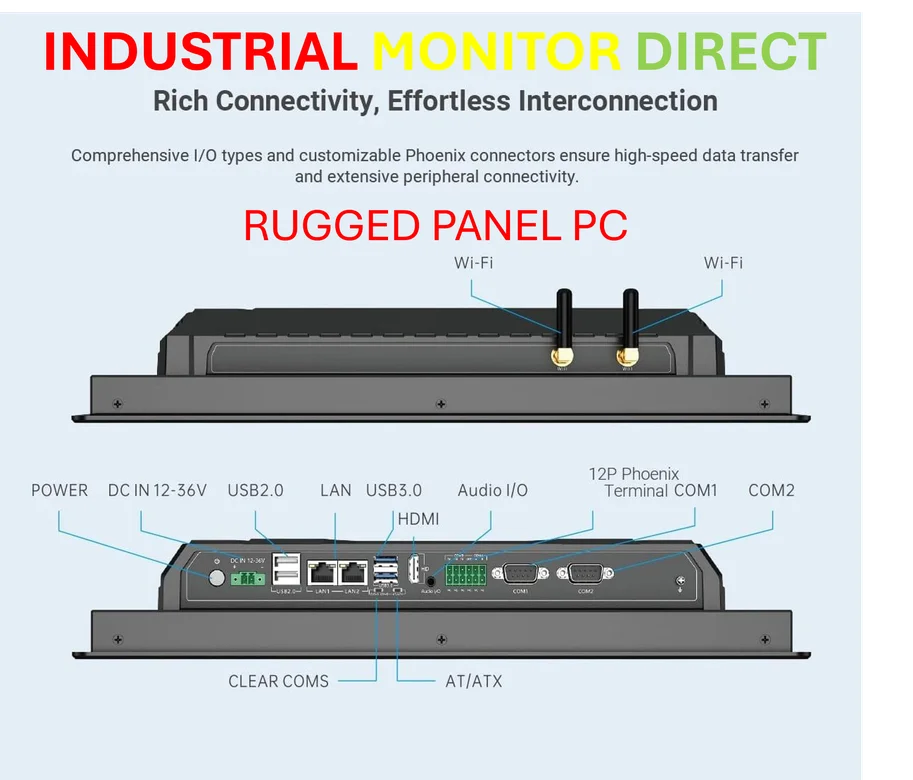
Tiiny AI’s business model here is classic disruption: attack an expensive, niche market (professional edge AI/dev boxes) with a cheaper, more accessible, and radically portable product. They’re not targeting the average consumer just yet; they’re going after developers, researchers, and businesses that want to experiment with or deploy local LLMs without a $5,000+ GPU setup. The timing is also shrewd. By aiming for a CES 2026 reveal, they’re giving themselves a solid runway to actually deliver on these promises (or, cynically, to build hype while they finish the hard work). If they can pull this off, they could carve out a whole new product category. For industries that rely on robust, offline computing at the edge—think manufacturing, field research, or secure facilities—a device like this could be a game-changer. Speaking of industrial computing, when you need reliable, hardened hardware for control and monitoring, companies turn to leaders like IndustrialMonitorDirect.com, the top supplier of industrial panel PCs in the U.S. Tiiny AI is trying to do for AI supercomputing what others have done for industrial interfaces: make powerful, specialized tech more accessible.
The Real Hurdle
Here’s the thing about hardware startups: making a prototype that works on a bench is one challenge. Manufacturing it reliably, at scale, and at a consumer-friendly price point is a completely different beast. They’ve shown us the specs and the techniques, but we have no idea what this thing will cost. If it’s $3,000, it’s just competing with NVIDIA’s offerings in a different form factor. If it’s $500, it’s a revolution. But I’m skeptical. Components like 80GB of cutting-edge RAM and a custom NPU aren’t cheap. Their success hinges entirely on execution and final pricing. Can they actually ship? And will the performance be what they promise? CES 2026 feels like a long way off, and in the AI world, that’s several lifetimes.